The Spine, Knee and Shoulder Specialists
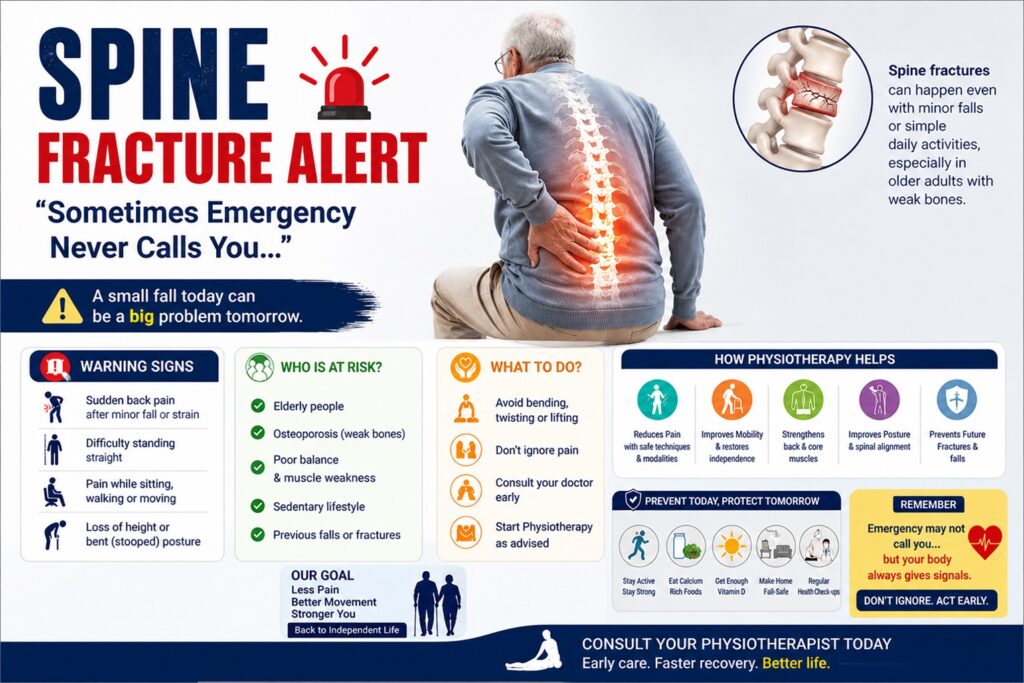
Not every medical emergency arrives with noise, drama, or warning sirens. Some come quietly—through a minor fall, a sudden twist, or even while lifting something light. Spine fractures, especially in older adults, often fall into this category. They don’t always feel like an “emergency” at first, but if ignored, they can change a person’s mobility, independence, and quality of life permanently.
This is why awareness—and timely physiotherapy for spine fracture at Capri Spine Clinic—plays a critical role in preventing long-term complications and improving recovery outcomes.
A spine fracture refers to a break or collapse of one or more vertebrae (bones of the spine). In younger individuals, this may happen due to high-impact trauma like accidents. But in older adults, even simple activities can lead to fractures due to weakened bones (often because of osteoporosis).
Early diagnosis and proper spine fracture treatment can help avoid complications like nerve compression and chronic back pain. Seeking expert care ensures better healing and mobility.
Common silent causes in elderly:
• Slipping in the bathroom
• Sudden sitting or bending
• Lifting moderate weight
• Even coughing or sneezing in severe bone weakness
The danger lies in underestimating the pain and delaying treatment.
Many people assume:
• “It’s just back pain”
• “It will settle with rest”
• “Age-related stiffness hai”
However, untreated spine fractures can silently worsen over time, making early back pain treatment in elderly extremely important. Timely care can prevent permanent spinal damage.
But a spine fracture may initially present as:
• Localized back pain
• Difficulty standing straight
• Pain increasing on movement
• Height loss or spinal curvature (in later stages)
Ignoring these signs can worsen the fracture, leading to nerve compression or long-term disability.
Before a fracture occurs, many elderly patients already have:
• Reduced bone density (osteoporosis)
• Weak core and back muscles
• Poor balance and risk of falls
• Joint stiffness
• Sedentary lifestyle
These risk factors highlight the importance of preventive care, including osteoporosis management and regular physiotherapy to strengthen muscles and improve balance.
These factors make the spine more vulnerable even to minor stress.
After a fracture, patients often experience:
Proper spine rehabilitation is crucial at this stage to restore function, reduce pain, and help patients regain independence safely.
• Severe or moderate back pain
• Limited mobility (walking, bending, sitting)
• Fear of movement (kinesiophobia)
• Postural deformity (stooping or kyphosis)
• Loss of independence
• Anxiety about falling again
• Depression due to reduced activity
This is where physiotherapy becomes not just helpful—but essential.
Physiotherapy supports recovery at every stage—whether the fracture is managed conservatively (without surgery) or post-surgery.
At Capri Spine Clinic, personalized physiotherapy programs focus on pain relief, mobility improvement, and long-term spine health.
Physiotherapists help reduce pain using:
• Gentle positioning techniques
• Heat/cold therapy
• Electrotherapy (like TENS or IFT)
• Breathing exercises to relax muscles
Effective pain management reduces dependency on medications and promotes faster recovery in spine fracture patients.
Goal: Reduce pain without heavy medications.
Patients are taught:
• How to get out of bed safely
• Correct sitting and standing posture
• Use of support devices (walker, brace)
Safe movement techniques are essential in preventing further injury and ensuring proper healing after a spine fracture.
This prevents further injury and builds confidence.
Once pain is controlled, gradual exercises begin:
• Core strengthening
• Back extensor muscle activation
• Hip and leg strengthening
Strengthening exercises play a vital role in spine stability and help reduce the risk of future fractures.
Why it matters: Strong muscles support the spine and prevent future fractures.
Incorrect posture can worsen spinal compression.
Posture correction is a key part of long-term spine care treatment, helping patients maintain alignment and reduce strain.
Physiotherapy focuses on:
• Upright posture training
• Ergonomic corrections (bed, chair, daily activities)
Especially critical for elderly:
• Balance exercises
• Gait training
• Home safety advice
Fall prevention strategies significantly reduce the chances of repeat fractures and improve patient confidence.
Reducing fall risk is as important as treating the fracture itself.
If surgery like vertebroplasty or spinal fixation is done:
• Gradual movement training
• Scar and stiffness management
• Functional independence recovery
Post-surgical physiotherapy ensures faster healing and helps patients return to daily activities safely.
With consistent physiotherapy:
Long-term physiotherapy at Capri Spine Clinic helps patients achieve sustainable recovery and better quality of life.
• Pain reduces significantly
• Mobility improves
• Independence returns
• Risk of future fractures decreases
• Quality of life improves
• Never ignore sudden back pain in elderly
• Avoid complete bed rest (it weakens muscles further)
• Encourage early physiotherapy consultation
• Ensure proper calcium & vitamin D intake (as advised by doctor)
• Make the home fall-proof (anti-slip mats, grab bars)
Family support and timely medical attention are essential for faster recovery and preventing complications.
If you are experiencing sudden back pain, difficulty in movement, or discomfort after a minor fall, it could be a sign of a spine fracture. Consult expert physiotherapists at Capri Spine for proper evaluation and care. Our specialists provide advanced, non-surgical physiotherapy treatment to reduce pain, restore mobility, and support safe recovery. Early physiotherapy plays a crucial role in preventing long-term complications and improving quality of life.
Contact Us Now:
Phone: +91-9063121212
Email: info@caprispine.com
Follow Capri Spine Clinic
Facebook: https://facebook.com/caprispineclinic
Instagram: https://instagram.com/caprispine
YouTube: https://www.youtube.com/@DEEPAKCAPRI
LinkedIn: https://linkedin.com/company/caprispine
See Our All Clinic Location : View All Locations
A spine fracture is a break or collapse of one or more vertebrae in the spine. It can occur due to trauma or weakened bones like osteoporosis. Early diagnosis is important to prevent complications.
Yes, many spine fractures can heal with conservative treatment like physiotherapy, rest, and medication. Proper rehabilitation helps restore mobility and reduce pain effectively.
Common symptoms include back pain, difficulty standing straight, and pain during movement. In some cases, height loss or spinal curvature may develop over time.
Physiotherapy helps reduce pain, improve mobility, and strengthen muscles supporting the spine. It also prevents future injuries and improves overall quality of life.
Recovery time depends on the severity of the fracture and treatment method. With proper physiotherapy, many patients start improving within weeks, but full recovery may take a few months.
Yes, elderly individuals are more prone due to reduced bone density and balance issues. Conditions like osteoporosis increase the risk even with minor falls or movements.
Gentle strengthening, posture correction, and balance exercises are usually recommended. These should always be done under the guidance of a physiotherapist.
Maintaining strong bones through calcium intake, regular exercise, and fall prevention strategies can reduce risk. Regular physiotherapy also helps improve strength and balance.