
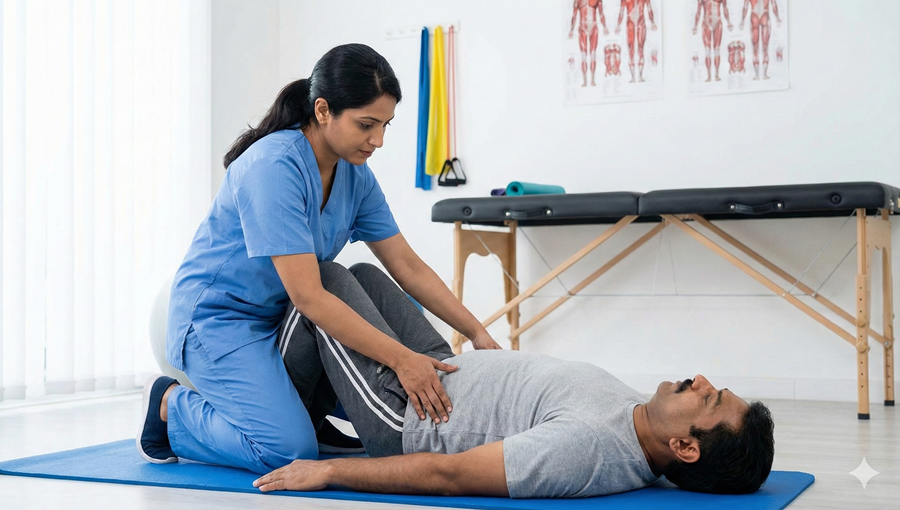
A slip disc (also known as disc prolapse or herniated disc) occurs when the soft inner portion of a spinal disc pushes outward and irritates nearby nerves. This can cause severe back or neck pain, leg or arm pain, tingling, numbness, or weakness.
In most cases, physiotherapy for slip disc is the first and most effective non-surgical treatment. It focuses on pain relief, nerve protection, and gradual restoration of spinal function—without stressing the injured disc.
How a Slip Disc Affects Daily Life
Patients with a slip disc often experience:
- Difficulty sitting, standing, or walking
- Pain radiating to arms or legs
- Increased pain during bending or lifting
- Muscle tightness and spasms
- Reduced confidence in movement
Ignoring symptoms or resting excessively may worsen stiffness and delay recovery. Slip disc physiotherapy treatment promotes safe movement instead of immobilization.
The Clinical Goal of Physiotherapy for Slip Disc
Physiotherapy is designed to:
- Reduce disc pressure and nerve irritation
- Control inflammation and muscle spasm
- Restore spinal mobility safely
- Strengthen muscles that support the spine
- Prevent recurrence or surgical intervention
Treatment is always individualized based on disc level, severity, and nerve involvement.
Step-by-Step Slip Disc Physiotherapy Treatment Plan
Step 1: Functional & Neurological Evaluation
The physiotherapist assesses:
- Pain behavior and movement tolerance
- Muscle strength and flexibility
- Nerve symptoms (tingling, numbness, weakness)
- Posture and daily activity habits
This determines which movements are safe and which must be avoided initially.
Step 2: Acute Pain Control & Disc Protection
During early recovery, treatment may include:
- Positioning techniques to unload the disc
- IFT or TENS for nerve pain
- Heat or cold therapy
- Gentle traction (when indicated)
The goal is to reduce pain while protecting the disc from further stress.
Step 3: Controlled Mobility & Manual Therapy
Once pain decreases:
- Gentle spinal mobilization improves movement
- Soft tissue techniques reduce muscle guarding
- Safe directional movements are introduced
All movements are progressed gradually.
Step 4: Core & Spinal Stabilization Training
Weak core muscles increase disc stress. Physiotherapy focuses on:
- Deep abdominal muscle activation
- Pelvic and spinal stabilizer strengthening
- Movement control during daily activities
This stage is critical for long-term recovery.
Step 5: Posture, Ergonomics & Activity Modification
Patients are trained in:
- Correct sitting and standing posture
- Safe bending and lifting techniques
- Workplace and home ergonomics
This prevents reinjury and chronic pain.
Physiotherapy Exercises for Slip Disc Pain (Condition-Based Selection)
Exercise choice depends on symptoms and disc location. Below are commonly prescribed physiotherapy exercises for slip disc, always supervised by a professional.
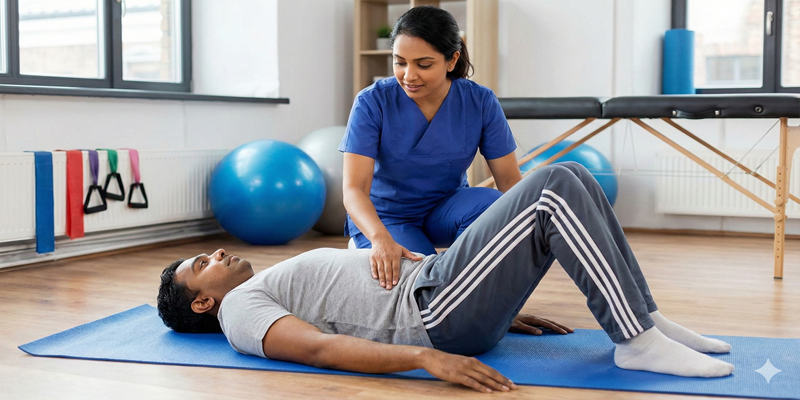
- Pelvic Tilt Exercise
- Activates deep core muscles
- Reduces pressure on lumbar discs
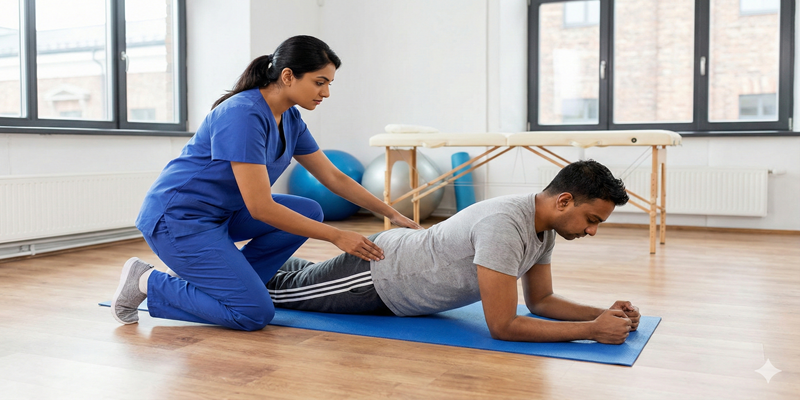
- McKenzie Extension (If Indicated)
- Helps centralize disc-related pain
- Reduces leg or arm symptoms
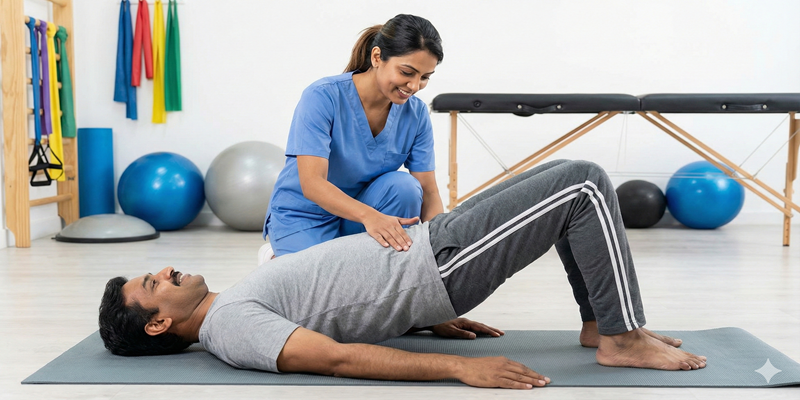
- Bridging Exercise
- Strengthens gluteal and spinal muscles
- Improves spinal support

- Bird Dog Exercise
- Enhances spinal stability and coordination

- Nerve Gliding Exercises
- Reduces nerve sensitivity
- Improves limb movement

- Gentle Hamstring Stretch
- Reduces tension along nerve pathways
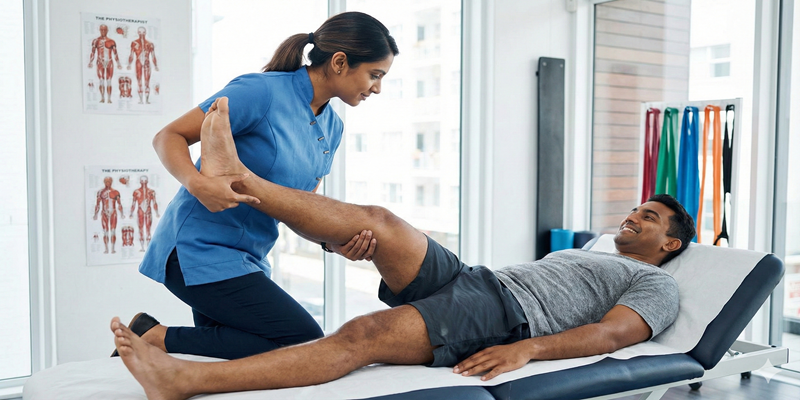
Important: Certain exercises can worsen a slip disc if done incorrectly. Always follow physiotherapist guidance.
Who Benefits Most From Slip Disc Physiotherapy Treatment?
Physiotherapy is highly effective when:
- MRI shows disc bulge or herniation without severe nerve damage
- Pain increases with sitting or bending
- Leg or arm pain is present but manageable
- Surgery is not urgently required
Early intervention significantly improves outcomes.
Expected Recovery With Physiotherapy
While recovery varies, most patients experience:
- Pain reduction within 1–2 weeks
- Improved mobility in 3–4 weeks
- Functional recovery within 6–8 weeks
Consistency with physiotherapy and home exercises is essential.
Advantages of Physiotherapy Over Surgery or Long-Term Medication
- Drug-free pain relief
- Preserves natural spinal movement
- Lower risk and cost than surgery
- Strengthens the spine for long-term protection
- Reduces recurrence
This makes physiotherapy for slip disc the preferred first-line treatment globally.
Warning Signs That Need Immediate Medical Attention
Seek urgent care if you experience:
- Progressive limb weakness
- Loss of bladder or bowel control
- Severe, worsening nerve pain
These may require medical or surgical intervention.
Conclusion
A slip disc does not automatically mean surgery. With a structured slip disc physiotherapy treatment plan, guided exercises, and posture correction, most patients recover safely and return to daily activities.
If you are dealing with persistent back or nerve pain, early physiotherapy for slip disc can help you heal naturally and avoid long-term complications.