
Sciatica vs Lower Back Pain: What's the Difference?
Lower back pain is one of the most common musculoskeletal problems affecting people of all ages. However, many people assume that every pain in the lower back is sciatica. In reality, Sciatica vs Lower Back Pain are two different conditions with different causes, symptoms, and treatment approaches. While lower back pain is usually limited to the lumbar region, sciatica occurs when the sciatic nerve becomes irritated or compressed, causing pain that travels from the lower back down through the buttock and into the leg.
Understanding the difference between these conditions is essential because receiving the correct diagnosis leads to more effective treatment and faster recovery. Ignoring the symptoms or self-diagnosing may delay proper care and allow the condition to worsen over time.
At Capri Spine Clinic, expert physiotherapists carefully assess every patient to identify the exact source of pain before creating a personalized rehabilitation program. Whether your pain is muscular, joint-related, or caused by nerve compression, the right physiotherapy plan can help reduce pain, improve mobility, and prevent future episodes.
If you are searching for Lower Back Pain Treatment in Delhi or Sciatica Treatment in Delhi, this guide will help you understand how these two conditions differ and when you should seek professional physiotherapy care.
What Is Lower Back Pain?
Lower back pain refers to discomfort or stiffness that is primarily felt in the lumbar region of the spine. It is one of the leading causes of reduced mobility and missed workdays worldwide. Lower back pain can develop suddenly due to an injury or gradually because of poor posture, muscle weakness, prolonged sitting, or age-related changes in the spine.
Most cases involve muscles, ligaments, joints, or spinal discs rather than nerve compression. The pain generally stays in the lower back and may become worse while bending, lifting heavy objects, or sitting for long periods.
Common Causes of Lower Back Pain
- Poor posture
- Muscle strain
- Ligament injury
- Sitting for long hours
- Heavy lifting
- Lack of physical activity
- Weak core muscles
- Obesity
- Degenerative disc disease
- Arthritis
Seeking early Lower Back Pain Treatment in Delhi can help prevent chronic pain and improve overall spinal health.
What Is Sciatica?
Sciatica is not a disease—it is a symptom caused by irritation, inflammation, or compression of the sciatic nerve, the longest nerve in the human body. This nerve begins in the lower spine and travels through the hips, buttocks, and down each leg.
Unlike ordinary lower back pain, sciatica usually causes pain that radiates beyond the back into one leg. Some patients also experience numbness, tingling, burning sensations, or muscle weakness. Because the sciatic nerve controls movement and sensation in the lower limbs, nerve compression can significantly affect walking and daily activities.
Common Causes of Sciatica
- Herniated (slipped) disc
- Spinal stenosis
- Piriformis syndrome
- Degenerative disc disease
- Bone spurs
- Spinal injuries
- Pregnancy-related nerve pressure
- Poor posture
Early Sciatica Treatment in Delhi can reduce nerve irritation and prevent long-term complications.
Sciatica vs Lower Back Pain: Key Differences
Although both conditions affect the lower back, their symptoms, causes, and treatment methods are different. Recognizing these differences can help you seek appropriate medical attention without delay.
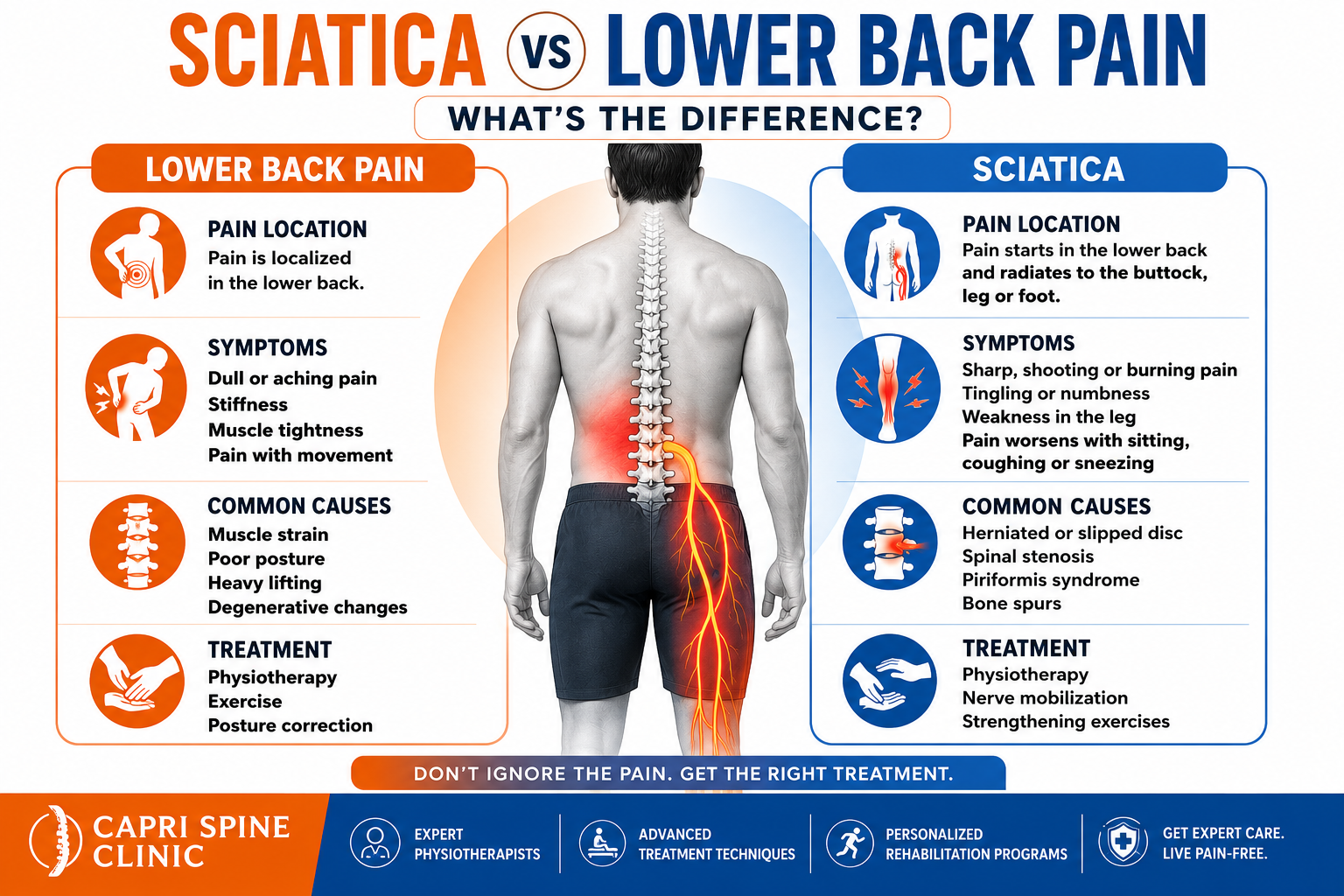
Lower back pain generally remains localized around the lumbar spine, while sciatica follows the path of the sciatic nerve and often extends into the buttocks, thighs, calves, and even the feet.
Difference Between Sciatica and Lower Back Pain
| Lower Back Pain | Sciatica |
|---|---|
| Pain stays in the lower back | Pain travels from back to leg |
| Usually muscular or joint-related | Caused by sciatic nerve compression |
| Dull or aching pain | Sharp, burning, or shooting pain |
| Rarely causes numbness | Often causes numbness and tingling |
| Usually affects both sides or center | Commonly affects one side |
| Walking may improve symptoms | Walking may worsen nerve pain |
Understanding Sciatica vs Lower Back Pain helps physiotherapists choose the most effective treatment strategy.
Common Symptoms of Lower Back Pain
Lower back pain symptoms can range from mild stiffness to severe discomfort that limits movement. The pain is generally localized and may worsen with prolonged sitting, standing, bending, or lifting.
Symptoms Include
- Dull aching pain
- Muscle tightness
- Morning stiffness
- Reduced flexibility
- Difficulty bending
- Pain after lifting heavy objects
- Muscle spasms
- Pain during prolonged sitting
Patients experiencing these symptoms may benefit from professional Back Pain Treatment, which focuses on improving spinal mobility, strengthening muscles, and correcting posture.
Common Symptoms of Sciatica
Sciatica symptoms usually occur because the sciatic nerve is compressed or inflamed. Unlike muscular back pain, sciatica often causes radiating pain and neurological symptoms that extend below the knee.
Symptoms Include
- Sharp shooting pain
- Burning sensation
- Pain radiating into one leg
- Tingling sensation
- Numbness
- Muscle weakness
- Difficulty standing for long periods
- Pain while coughing or sneezing
Patients with these symptoms often require specialized Sciatica Treatment in Delhi to relieve nerve compression and restore normal movement.
What Causes These Conditions?
Although both conditions affect the lower back, their underlying causes are different. Lower back pain is commonly related to muscles, joints, and ligaments, whereas sciatica develops when the sciatic nerve becomes compressed.
Several lifestyle factors increase the risk of developing both conditions.
Risk Factors
- Poor posture
- Sedentary lifestyle
- Weak core muscles
- Improper lifting techniques
- Obesity
- Aging
- Smoking
- Repetitive bending
- Sports injuries
- Long working hours
Making simple lifestyle changes can significantly reduce the likelihood of developing chronic back problems.
How Physiotherapy Helps in Recovery
Physiotherapy is considered one of the safest and most effective non-surgical treatments for both lower back pain and sciatica. Rather than simply reducing pain, physiotherapy addresses the underlying mechanical problems causing the condition.
Treatment is personalized according to the patient’s symptoms, physical examination, and recovery goals.
Physiotherapy May Include
- Manual therapy
- Stretching exercises
- Core strengthening
- Nerve mobilization
- Posture correction
- Balance training
- Walking correction
- Flexibility exercises
- Ergonomic advice
- Home exercise program
Patients diagnosed with spinal disc problems may also benefit from Slip Disc Treatment, which helps reduce pressure on affected spinal nerves and improve spinal function.
When Should You Visit a Physiotherapist?
Many people ignore back pain until it becomes severe. However, early physiotherapy intervention often results in faster recovery and reduces the risk of chronic pain or surgery.
You should consult a physiotherapist if your symptoms persist for several days, interfere with daily activities, or begin radiating into your legs.
Seek Professional Help If You Experience
- Pain lasting more than one week
- Radiating leg pain
- Numbness or tingling
- Difficulty walking
- Muscle weakness
- Recurrent episodes of back pain
- Pain after injury
- Difficulty sitting or standing
Individuals experiencing persistent neck problems may also require Neck Pain Physiotherapy, while shoulder injuries can benefit from structured Shoulder Pain Treatment programs. Patients with joint degeneration or sports injuries may also receive personalized Knee Pain Treatment as part of their rehabilitation plan.
Conclusion
Understanding Sciatica vs Lower Back Pain is essential because the two conditions have different causes, symptoms, and treatment approaches. While lower back pain is often caused by muscle strain, poor posture, or joint problems, sciatica develops when the sciatic nerve becomes irritated or compressed, leading to pain that radiates into the leg.
Early diagnosis and appropriate physiotherapy can significantly improve recovery, reduce pain, and help prevent future episodes. Rather than relying on painkillers alone, addressing the root cause through a personalized rehabilitation program offers better long-term results.
If you are experiencing persistent lower back pain or symptoms of sciatica, seeking professional Lower Back Pain Treatment in Delhi or Sciatica Treatment in Delhi can help restore mobility, improve strength, and allow you to return to your normal activities safely.
Also Read Related Physiotherapy Blogs
Don’t Ignore Sciatica or Lower Back Pain – Get Expert Physiotherapy Care Before It Affects Your Daily Life
If you are experiencing pain in your lower back, buttocks, hips, or legs, it can be difficult to know whether the cause is sciatica or lower back pain. Identifying the exact source of your pain is essential for choosing the most effective treatment and achieving long-term relief. Consult expert physiotherapists at Capri Spine for a detailed assessment and personalized physiotherapy care. Our specialists provide advanced, non-surgical physiotherapy programs designed to relieve pain, reduce nerve irritation, improve spinal mobility, strengthen core and back muscles, and restore normal movement. Early physiotherapy care can help prevent your condition from worsening, improve your daily comfort, and enhance your overall quality of life.
Contact Us Now:
Phone: +91-9063121212
Email: info@caprispine.com
Follow Capri Spine Clinic
Facebook: https://facebook.com/caprispineclinic
Instagram: https://instagram.com/caprispine
YouTube: https://www.youtube.com/@DEEPAKCAPRI
LinkedIn: https://linkedin.com/company/caprispine
See Our All Clinic Location : View All Locations