
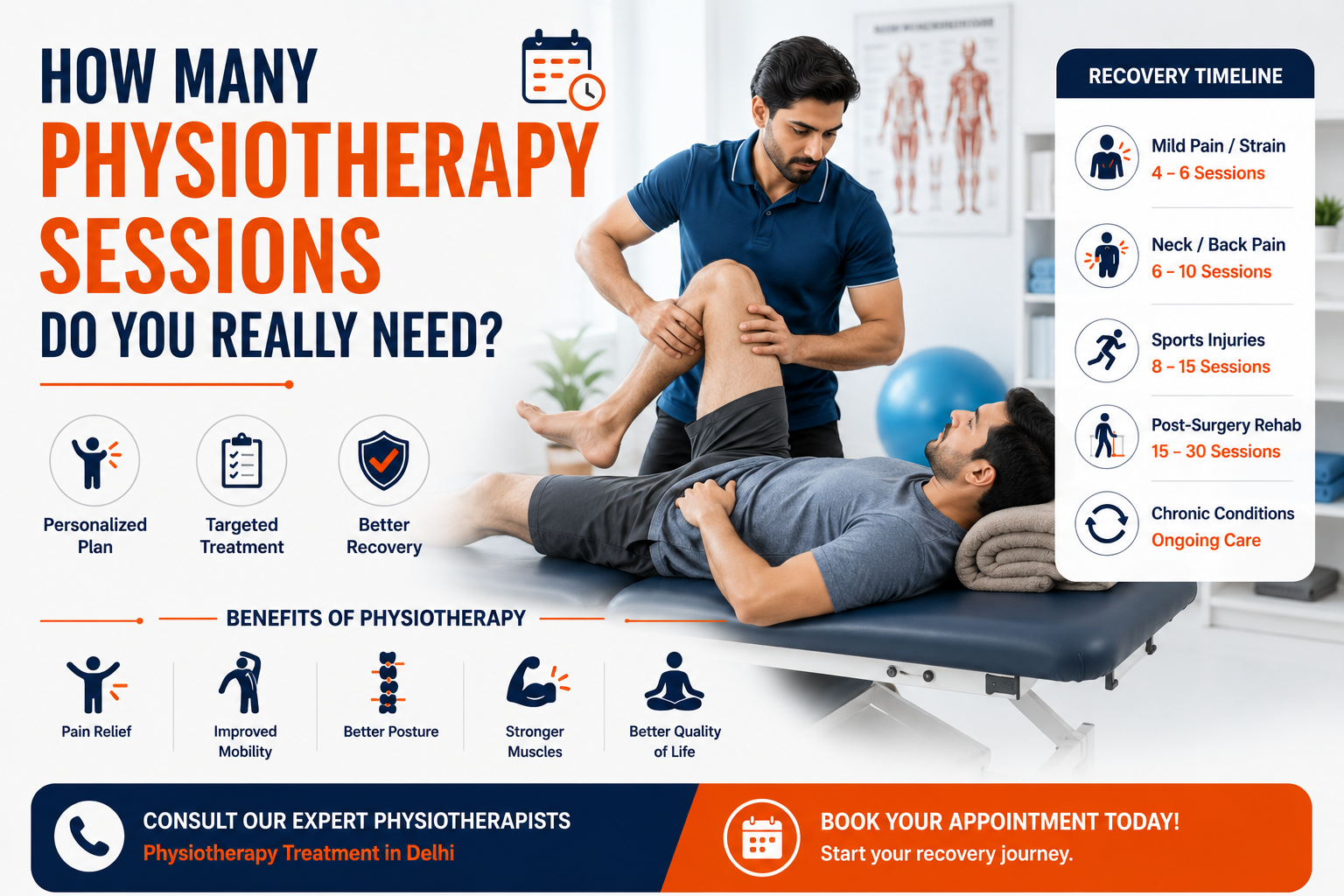
How Many Physiotherapy Sessions Do You Really Need?
Recovering from an injury, surgery, or chronic pain often raises one important question: “How Many Physiotherapy Sessions Do I Need?” Unfortunately, there isn’t a single answer that applies to everyone. Every person’s body heals differently, and the number of physiotherapy sessions required depends on several factors, including the type of condition, severity of pain, overall health, age, lifestyle, and commitment to rehabilitation.
Many people assume physiotherapy is only about pain relief, but it is much more than that. A structured physiotherapy program helps restore movement, improve muscle strength, increase flexibility, correct posture, and prevent future injuries. Instead of simply masking symptoms, physiotherapy addresses the root cause of the problem and promotes long-term recovery.
At Capri Spine Clinic, experienced physiotherapists perform a detailed assessment before creating a personalized rehabilitation plan. Whether you are recovering from a sports injury, suffering from chronic neck pain, dealing with lower back pain, or recovering after surgery, every treatment plan is customized according to your recovery goals.
If you are looking for Physiotherapy Treatment in Delhi, understanding how physiotherapy works and what influences your recovery timeline can help you stay committed to your rehabilitation and achieve better long-term results.
Why There Is No Fixed Number of Physiotherapy Sessions
One of the biggest misconceptions about physiotherapy is that every patient requires the same number of sessions. In reality, every injury and every patient is different. Two people with similar conditions may recover at completely different rates because of differences in muscle strength, age, physical activity, medical history, and healing capacity.
For example, a young athlete with a mild ligament strain may recover within a few weeks, while an older adult with arthritis or long-term spinal problems may require a more extensive rehabilitation program. Physiotherapists continuously monitor progress and modify the treatment plan whenever necessary to ensure optimal recovery.
Factors That Influence Recovery
- Nature of the injury or condition
- Severity of pain
- Duration of symptoms
- Patient’s age
- Overall health condition
- Muscle strength
- Flexibility
- Body weight
- Previous injuries
- Daily activities
- Occupation
- Commitment to home exercises
Patients receiving Physiotherapy Treatment in Delhi are usually given customized rehabilitation plans because no two recovery journeys are exactly the same.
Why the Initial Physiotherapy Assessment Matters
Every successful physiotherapy program begins with a detailed assessment. This initial evaluation helps identify the root cause of pain rather than simply treating the symptoms. Understanding why pain occurs allows the physiotherapist to develop a targeted treatment plan that promotes lasting recovery.
During the first consultation, the physiotherapist examines posture, joint mobility, muscle strength, flexibility, walking pattern, balance, and movement quality. They also review medical history, previous injuries, work habits, and lifestyle factors that may contribute to the problem.
This comprehensive assessment ensures that each patient receives the most appropriate rehabilitation program instead of a one-size-fits-all treatment.
During Your Assessment, the Physiotherapist May Evaluate
- Pain location and intensity
- Range of motion
- Joint mobility
- Muscle strength
- Muscle flexibility
- Walking pattern
- Standing posture
- Sitting posture
- Previous injuries
- Lifestyle habits
- Sports participation
- Occupational activities
Based on these findings, your physiotherapist can estimate How Many Physiotherapy Sessions Do I Need and adjust the treatment plan according to your progress.
How Many Physiotherapy Sessions Do I Need?
This is one of the most common questions patients ask before beginning rehabilitation. While it is impossible to predict an exact number of sessions for every patient, physiotherapists can estimate recovery timelines based on the condition being treated.
Minor muscle strains generally recover faster because muscle tissue heals relatively quickly. However, injuries involving ligaments, tendons, joints, or nerves often require longer rehabilitation. Chronic pain conditions may also take more time because muscles need to regain strength, flexibility, and proper movement patterns.
The goal of physiotherapy is not only to reduce pain but also to restore normal body function and minimize the chances of future injuries.
Estimated Number of Physiotherapy Sessions
- Mild muscle strain – 4 to 6 sessions
- Neck pain – 6 to 10 sessions
- Lower back pain – 6 to 12 sessions
- Sports injuries – 8 to 15 sessions
- Frozen shoulder – 10 to 20 sessions
- Knee rehabilitation – 10 to 18 sessions
- ACL rehabilitation – 15 to 30 sessions
- Post-surgery rehabilitation – 15 to 40 sessions
- Chronic pain conditions – Depends on progress
Patients usually notice gradual improvement after the first few sessions, but complete healing requires consistency and commitment throughout the rehabilitation process.
What Happens During a Physiotherapy Session?
Modern physiotherapy combines several treatment techniques to improve movement, relieve pain, and restore physical function. Every session is planned according to the patient’s condition and recovery stage.
Early sessions typically focus on reducing pain, inflammation, and stiffness. As healing progresses, treatment shifts toward strengthening muscles, improving balance, correcting posture, and restoring full movement.
Each visit builds upon the previous one, ensuring continuous improvement throughout the rehabilitation program.
A Typical Physiotherapy Session May Include
- Pain assessment
- Manual therapy
- Joint mobilization
- Soft tissue release
- Stretching exercises
- Strengthening exercises
- Balance training
- Functional movement training
- Gait correction
- Posture education
- Home exercise review
- Progress assessment
Patients who regularly perform their prescribed home exercises often recover faster than those who rely only on clinic visits.
Conditions That Usually Require Longer Rehabilitation
Some conditions take longer to recover because they involve deeper tissues, severe muscle weakness, joint instability, or nerve irritation. These patients often require a structured rehabilitation program that progresses gradually to restore strength and function safely.
Conditions affecting the spine, ligaments, and major joints require careful monitoring to prevent re-injury. Physiotherapists increase exercise intensity only when the body is ready.
Conditions That May Need More Physiotherapy Sessions
- Chronic lower back pain
- Sports injuries
- Ligament injuries
- ACL tears
- Frozen shoulder
- Arthritis
- Neurological conditions
- Balance disorders
- Post-operative rehabilitation
- Severe muscle weakness
Patients with persistent spinal problems may also benefit from Back Pain Treatment, which focuses on improving spinal stability, strengthening supporting muscles, and restoring comfortable movement.
Individuals diagnosed with spinal disc problems often require Slip Disc Treatment alongside physiotherapy to reduce nerve compression, improve flexibility, and prevent recurring episodes of pain.
Patients experiencing pain radiating into the legs due to nerve irritation may benefit from Sciatica Pain Treatment, which combines manual therapy, stretching, strengthening exercises, and posture correction to relieve pressure on the sciatic nerve and improve daily mobility.
Benefits of Completing Your Full Physiotherapy Treatment Plan
Many people stop physiotherapy once they begin to feel better. While the pain may reduce after a few sessions, this does not always mean the injury has completely healed. Muscles, joints, ligaments, and connective tissues continue to recover even after the pain decreases. Ending treatment too early can increase the risk of recurring pain, reduced mobility, and future injuries.
Completing your prescribed rehabilitation program allows your body to regain strength, flexibility, balance, and endurance. Physiotherapists gradually progress your exercises according to your recovery, ensuring that your body can safely return to normal activities without placing unnecessary stress on healing tissues.
Patients who complete their rehabilitation plan generally experience better long-term outcomes than those who discontinue treatment prematurely.
Benefits of Completing the Recommended Sessions
- Complete recovery from the underlying condition
- Better muscle strength
- Improved flexibility
- Restored joint mobility
- Better posture and body alignment
- Reduced risk of recurring pain
- Increased confidence during movement
- Improved balance and coordination
- Faster return to work or sports
- Long-term improvement in quality of life
Individuals experiencing cervical spine problems often benefit from Neck Pain Physiotherapy, which helps reduce stiffness, improve posture, and restore comfortable neck movement.
Signs That Your Physiotherapy Is Working
Recovery through physiotherapy is usually gradual rather than immediate. Some patients notice improvements within the first few sessions, while others recover steadily over several weeks. Instead of focusing only on pain levels, it is important to observe improvements in mobility, flexibility, strength, and daily function.
Your physiotherapist will regularly evaluate your progress and make adjustments to your rehabilitation plan whenever necessary. Small improvements each week indicate that your body is responding positively to treatment.
Positive Signs of Recovery
- Reduced pain intensity
- Less morning stiffness
- Easier walking and movement
- Increased flexibility
- Better muscle strength
- Improved posture
- Better balance
- Improved confidence while exercising
- Reduced dependence on pain medication
- Ability to perform daily activities comfortably
Recovery is different for everyone, but consistent progress is the best indicator that physiotherapy is working effectively.
Common Mistakes That Slow Down Recovery
Successful physiotherapy depends not only on attending clinic sessions but also on following your rehabilitation program at home. Many patients unknowingly delay their recovery by skipping appointments, avoiding home exercises, or returning to heavy activities before their body is fully healed.
Healing requires consistency, patience, and active participation. Even the most advanced treatment techniques cannot provide optimal results without patient commitment.
Mistakes to Avoid
- Skipping physiotherapy appointments
- Ignoring prescribed home exercises
- Poor sitting and standing posture
- Returning to sports too early
- Lifting heavy weights before recovery
- Self-medicating without professional advice
- Inconsistent treatment
- Expecting immediate results
- Poor sleep habits
- Lack of patience during rehabilitation
Avoiding these mistakes allows your body to recover more efficiently and reduces the likelihood of future injuries.
How to Recover Faster During Physiotherapy
Although healing takes time, there are several ways to support your recovery outside the clinic. Healthy lifestyle habits, proper nutrition, regular exercise, and following your physiotherapist’s advice all contribute to better treatment outcomes.
Small improvements in your daily routine can significantly speed up rehabilitation and improve long-term physical health.
Tips for Faster Recovery
- Attend every scheduled physiotherapy session
- Perform home exercises consistently
- Stay physically active within safe limits
- Maintain proper posture
- Stay hydrated
- Eat a balanced diet rich in protein
- Sleep for 7–8 hours every night
- Avoid smoking and excessive alcohol
- Manage stress effectively
- Report any new symptoms to your physiotherapist
Patients recovering from shoulder injuries often achieve better results with structured Shoulder Pain Treatment, which focuses on restoring movement, reducing pain, and strengthening the shoulder muscles. Likewise, people experiencing arthritis, ligament injuries, or post-operative rehabilitation may benefit from Knee Pain Treatment, helping improve joint stability, mobility, and long-term function.
Why Choose Capri Spine Clinic?
Choosing an experienced physiotherapy clinic can make a significant difference in your recovery. At Capri Spine Clinic, every patient receives a personalized treatment plan based on a detailed physical assessment rather than a standard treatment approach.
The clinic focuses on identifying the root cause of pain and providing evidence-based physiotherapy treatments that improve mobility, reduce pain, and restore function. Experienced physiotherapists combine manual therapy, therapeutic exercises, posture correction, and patient education to deliver comprehensive, non-surgical rehabilitation for a wide range of musculoskeletal conditions.
Whether you are recovering from a sports injury, surgery, chronic pain, or age-related mobility issues, Capri Spine Clinic aims to help you return to your daily activities safely and confidently.
Conclusion
There is no fixed answer to “How Many Physiotherapy Sessions Do I Need?” because every patient’s condition, lifestyle, and recovery speed are unique. Some individuals recover within a few sessions, while others require a more comprehensive rehabilitation program to achieve lasting results.
The key to successful recovery is consistency. Attending all recommended sessions, following your home exercise program, and maintaining healthy lifestyle habits can significantly improve treatment outcomes. Physiotherapy is not just about relieving pain—it is about restoring movement, preventing future injuries, and helping you live a healthier, more active life.
If you are looking for professional Physiotherapy Treatment in Delhi, consulting experienced physiotherapists can help you receive a personalized rehabilitation plan tailored to your specific condition and long-term recovery goals.
Also Read Related Physiotherapy Blogs
Don’t Delay Your Recovery with the Wrong Treatment Plan – Get Expert Physiotherapy Care for the Right Number of Sessions
If pain, stiffness, weakness, or limited mobility is affecting your daily activities, the number of physiotherapy sessions you need will depend on your condition, its severity, and your recovery progress. Consult expert physiotherapists at Capri Spine for a professional assessment and personalized treatment plan. Our specialists provide advanced, non-surgical physiotherapy programs designed to reduce pain, improve strength, restore mobility, and support long-term recovery. Following the recommended number of sessions consistently can help prevent recurring problems, improve physical function, and enhance your overall quality of life.
Contact Us Now:
Phone: +91-9063121212
Email: info@caprispine.com
Follow Capri Spine Clinic
Facebook: https://facebook.com/caprispineclinic
Instagram: https://instagram.com/caprispine
YouTube: https://www.youtube.com/@DEEPAKCAPRI
LinkedIn: https://linkedin.com/company/caprispine
See Our All Clinic Location : View All Locations