
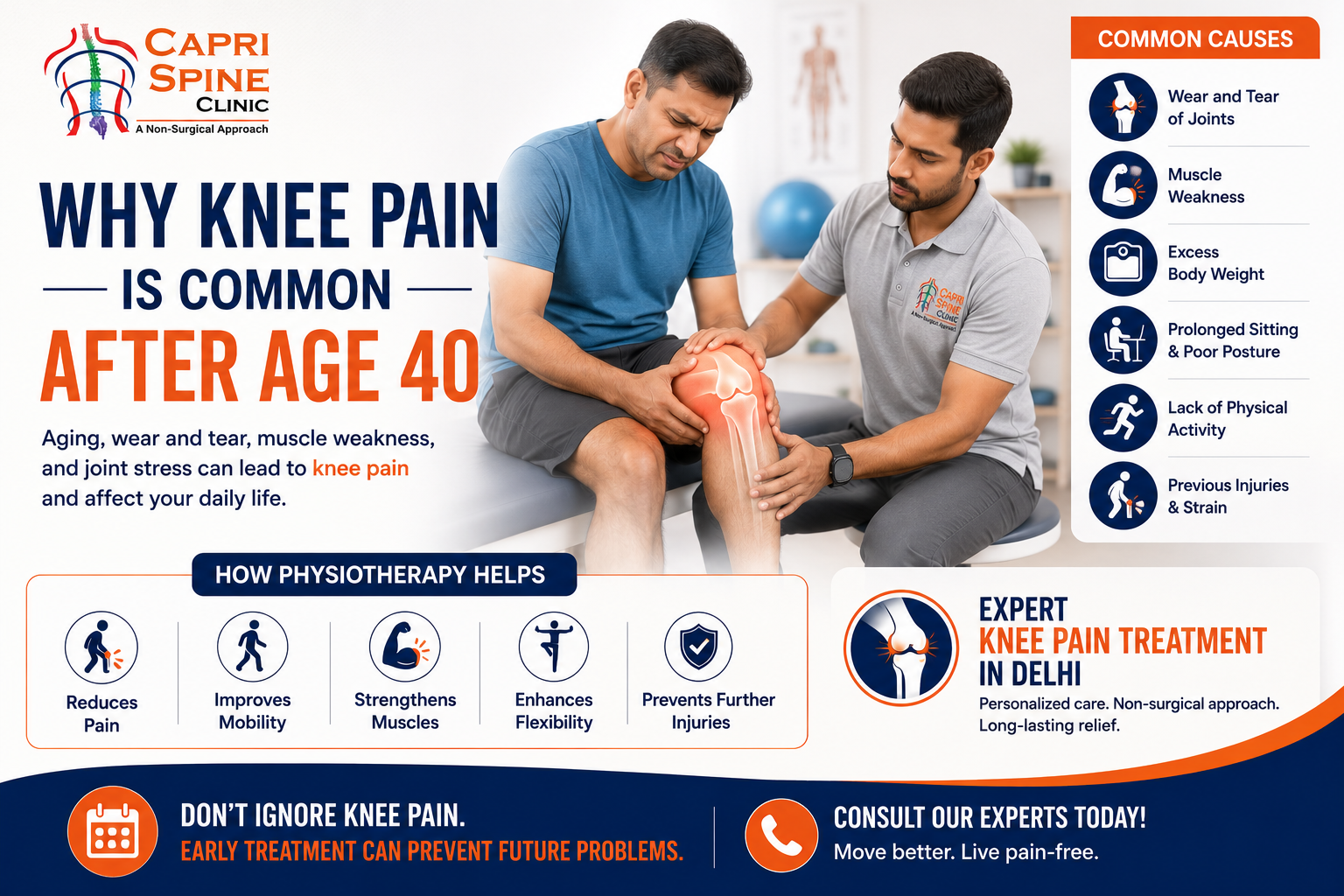
Why Knee Pain Is Common After Age 40
As people grow older, the body naturally undergoes several changes that can affect joint health and mobility. One of the most common complaints after the age of 40 is knee pain. Daily activities such as walking, climbing stairs, sitting for long hours, or standing for extended periods can put additional stress on the knee joints. Over time, wear and tear, muscle weakness, and reduced flexibility may contribute to persistent discomfort.
At Capri Spine Clinic, expert physiotherapists provide advanced non-surgical rehabilitation programs to help reduce knee pain, improve mobility, and support long-term joint health naturally.
Why Does Knee Pain Increase After Age 40?
After the age of 40, the cartilage that cushions the knee joint may gradually wear down. Muscles around the knee can also become weaker, reducing joint support and increasing pressure on the knees.
Common Reasons Include
- Age-related joint wear and tear
- Reduced muscle strength
- Decreased flexibility
- Poor posture and body mechanics
- Weight gain and increased joint stress
- Previous injuries
- Lack of physical activity
These factors often increase the need for professional Knee Pain Treatment Delhi services.
Common Symptoms of Knee Pain
Knee pain can start gradually and become more noticeable over time. Ignoring early symptoms may lead to reduced mobility and difficulty performing daily activities.
Common Symptoms Include
- Pain while walking
- Difficulty climbing stairs
- Knee stiffness in the morning
- Swelling around the knee
- Clicking or cracking sounds
- Reduced range of motion
- Weakness in the legs
People experiencing these symptoms should consult a Knee pain specialist Delhi for proper evaluation and treatment.
How Osteoarthritis Affects the Knee Joint
Osteoarthritis is one of the most common causes of knee pain after age 40. It occurs when the protective cartilage in the knee joint gradually breaks down, causing friction and discomfort.
Osteoarthritis May Cause
- Joint stiffness
- Persistent knee pain
- Swelling and inflammation
- Difficulty moving the knee
- Reduced flexibility
- Pain after physical activity
Early physiotherapy intervention can help manage symptoms and improve joint function.
How Physiotherapy Helps Reduce Knee Pain
Physiotherapy is one of the safest and most effective non-surgical treatments for knee pain. It focuses on strengthening muscles, improving flexibility, and reducing pressure on the knee joint.
Physiotherapy Helps By
- Strengthening knee-supporting muscles
- Improving joint flexibility
- Reducing stiffness and pain
- Enhancing balance and mobility
- Improving walking and movement patterns
- Supporting long-term joint health
Many patients seeking Knee Pain Treatment Delhi benefit from personalized physiotherapy programs.
Best Physiotherapy Exercises for Knee Pain
Specific exercises can help strengthen the muscles around the knee and improve overall joint stability.
Helpful Exercises Include
- Straight leg raises
- Quadriceps strengthening exercises
- Hamstring stretches
- Heel slides
- Wall-supported squats
- Step-up exercises
- Walking and mobility exercises
These exercises help reduce pain and improve daily movement naturally.
Lifestyle Changes That Help Prevent Knee Pain
Simple lifestyle modifications can significantly reduce stress on the knees and support healthy joint function.
Healthy Habits Include
- Maintaining a healthy weight
- Staying physically active
- Stretching regularly
- Wearing supportive footwear
- Avoiding prolonged sitting
- Following proper posture habits
- Strengthening leg muscles
These habits can reduce the risk of chronic knee problems and improve mobility.
Related Conditions That May Affect Mobility
Knee pain is often associated with other musculoskeletal conditions that affect movement and posture.
Conditions We Treat
- Back Pain Treatment
- Slip Disc Treatment
- Sciatica Pain Treatment
- Neck Pain Physiotherapy
- Shoulder Pain Treatment
Addressing these conditions can help improve overall body mechanics and reduce unnecessary stress on the knees.
Also Read Related Physiotherapy Blogs
Don’t Ignore Knee Pain After 40 – Get Expert Physiotherapy Care Before It Affects Your Mobility
If knee pain is affecting your daily activities, climbing stairs, walking, or overall mobility after the age of 40, it may be a sign of age-related joint changes, muscle weakness, or underlying knee conditions. Consult expert physiotherapists at Capri Spine for professional knee pain assessment and treatment. Our specialists provide advanced, non-surgical physiotherapy programs designed to reduce pain, improve joint flexibility, strengthen supporting muscles, and restore knee function. Early physiotherapy care can help prevent further joint deterioration, improve mobility, and enhance your overall quality of life.
Contact Us Now:
Phone: +91-9063121212
Email: info@caprispine.com
Follow Capri Spine Clinic
Facebook: https://facebook.com/caprispineclinic
Instagram: https://instagram.com/caprispine
YouTube: https://www.youtube.com/@DEEPAKCAPRI
LinkedIn: https://linkedin.com/company/caprispine
See Our All Clinic Location : View All Locations