
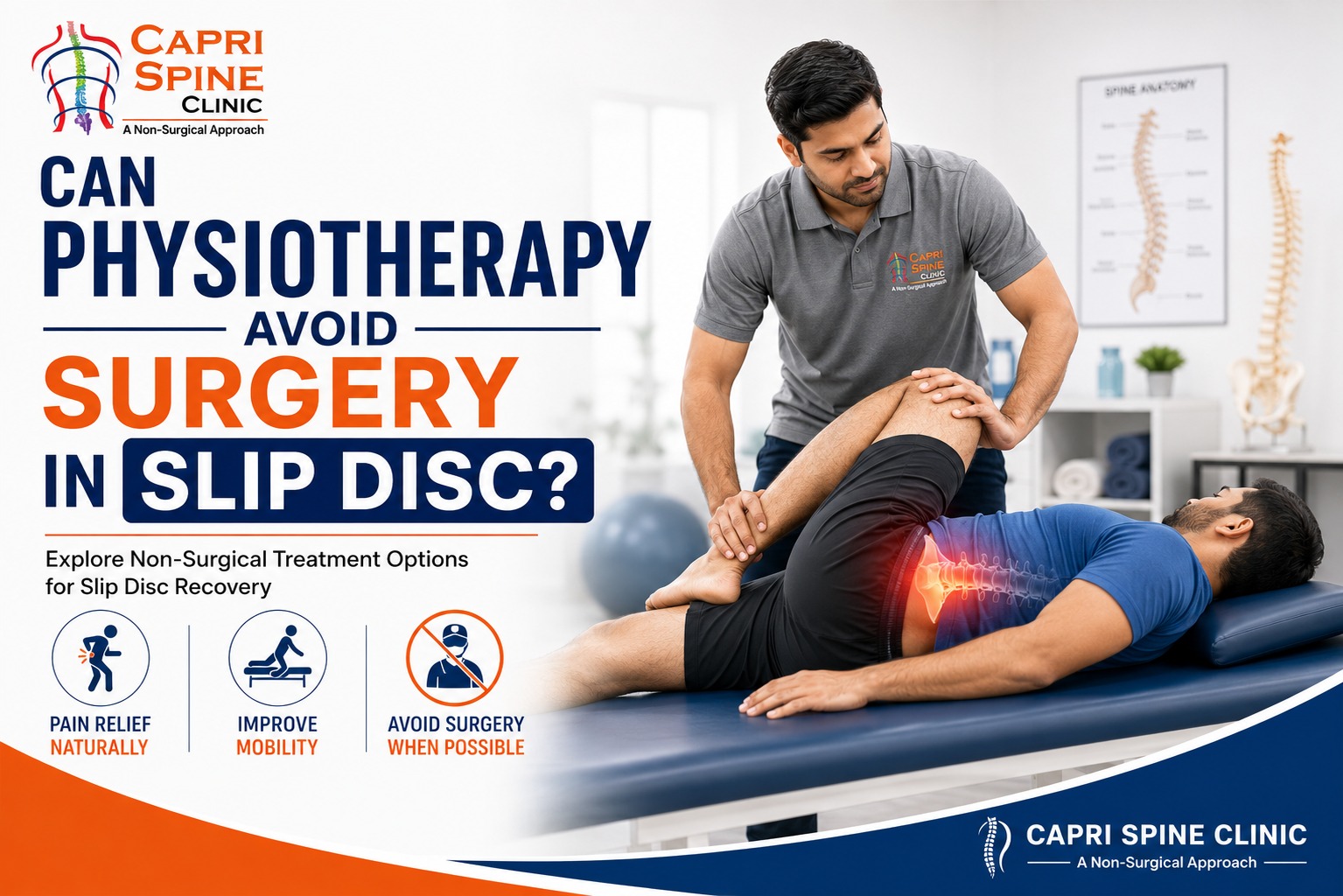
Can Physiotherapy Avoid Surgery in Slip Disc? Understanding Your Treatment Options
Slip disc is one of the most common spine-related conditions affecting adults today. Many patients become anxious immediately after hearing the diagnosis because they assume surgery is the only solution.
The good news is that surgery is not always necessary. In many cases, physiotherapy can help manage symptoms, improve mobility, reduce pain, and support recovery without surgical intervention.
If you have recently been diagnosed with a slip disc and are wondering whether physiotherapy can help you avoid surgery, this guide will help you understand your options.
What is a Slip Disc?
A slip disc, also known as a herniated disc or prolapsed disc, occurs when the soft inner portion of a spinal disc pushes through the outer layer. This can put pressure on nearby nerves and lead to pain, numbness, tingling, or weakness.
The condition most commonly affects the lower back (lumbar spine) but can also occur in the neck (cervical spine). While the symptoms can be alarming, many patients respond well to conservative treatment approaches.
Many people searching for slip disc treatment are often surprised to learn that a large number of cases can be managed successfully through non-surgical treatments such as physiotherapy.
Common Symptoms of Slip Disc
The symptoms of a slip disc vary depending on the location and severity of the disc problem. Some patients experience mild discomfort, while others may have pain that affects their daily routine and mobility.
Common symptoms include:
- Lower back pain
- Neck pain
- Pain radiating into the arms or legs
- Numbness or tingling sensation
- Muscle weakness
- Difficulty sitting for long periods
- Increased pain while bending or lifting
- Reduced mobility and flexibility
If these symptoms persist or worsen over time, professional evaluation is important to determine the most appropriate treatment plan.
Does Every Slip Disc Need Surgery?
The simple answer is No.
One of the biggest misconceptions about slip disc treatment is that surgery is always required. In reality, many patients recover successfully through conservative treatments.
Research and clinical experience show that most slip disc patients improve through:
- Physiotherapy
- Activity modification
- Posture correction
- Guided exercises
- Pain management techniques
- Lifestyle improvements
Surgery is generally considered only when conservative treatment fails or when severe neurological symptoms are present.
Physiotherapy vs Surgery for Slip Disc
Many patients struggle to decide between physiotherapy and surgery after receiving a slip disc diagnosis. Understanding the differences can help patients make informed decisions about their treatment journey.
Physiotherapy focuses on improving function, reducing pain, and helping the body recover naturally, whereas surgery is generally reserved for severe or complicated cases.
Factor | Physiotherapy | Surgery |
Invasive Procedure | No | Yes |
Recovery Time | Usually Gradual | May Require Extended Recovery |
Risk of Complications | Low | Higher |
Hospital Stay | Not Required | Required |
Focus | Root Cause & Rehabilitation | Structural Correction |
Cost | Generally Lower | Generally Higher |
Long-Term Strengthening | Yes | Requires Rehabilitation After Surgery |
For many patients, physiotherapy offers a safer first-line treatment option before considering surgery.
How Physiotherapy Helps Slip Disc Patients
Physiotherapy plays an important role in managing slip disc symptoms without surgery. It focuses on reducing pain, improving spinal mobility, and strengthening the muscles that support the spine. A structured physiotherapy program can help patients return to their daily activities while reducing stress on the affected disc.
Physiotherapy focuses on reducing symptoms while improving spinal function and overall mobility.
Pain Reduction
Physiotherapists use evidence-based techniques to reduce pain and inflammation.
These may include:
- Manual therapy
- Soft tissue mobilization
- Therapeutic exercises
- Electrotherapy
- Heat or cold therapy
Reducing pain allows patients to move more comfortably and begin rehabilitation.
Improves Spinal Mobility
Slip disc often causes stiffness and restricted movement.
A structured physiotherapy program helps:
- Improve flexibility
- Restore movement patterns
- Reduce muscle tightness
- Improve daily functioning
Strengthens Core and Back Muscles
Weak supporting muscles place additional stress on the spine.
Physiotherapy includes targeted strengthening exercises that:
- Improve spinal support
- Enhance posture
- Reduce strain on discs
- Lower the risk of recurrence
Corrects Posture and Movement Patterns
Poor posture is one of the major contributors to recurring spinal problems.
Physiotherapists assess:
- Sitting posture
- Standing posture
- Walking mechanics
- Workplace ergonomics
Helps Avoid Future Episodes
Many patients experience recurring back pain because they only focus on pain relief rather than addressing the underlying cause.
Physiotherapy teaches:
- Safe movement techniques
- Spine protection strategies
- Home exercise programs
- Lifestyle modifications
When Can Physiotherapy Help Avoid Surgery?
Many patients with mild to moderate slip disc symptoms can benefit significantly from physiotherapy. Early intervention helps reduce inflammation, improve movement, and support natural healing. In many cases, consistent rehabilitation and exercise therapy may reduce the need for surgical treatment.
Physiotherapy is often effective when:
- Pain is manageable
- No severe neurological deficits exist
- Symptoms are improving gradually
- Muscle weakness is mild
- Daily activities can still be performed
Patients who actively participate in their rehabilitation program often experience better outcomes and improved quality of life.
When Surgery May Be Necessary
Although physiotherapy is effective for many patients, some cases require surgical intervention. Severe nerve compression, progressive muscle weakness, or loss of bladder and bowel control may indicate a more serious condition. In such situations, immediate medical evaluation is essential to determine the best treatment approach.
Surgery may be considered if:
- Progressive muscle weakness develops
- Loss of bladder or bowel control occurs
- Severe nerve compression is present
- Symptoms persist despite conservative treatment
- Significant loss of function affects daily life
These situations require prompt consultation with a spine specialist.
Benefits of Choosing Physiotherapy First
Physiotherapy offers a non-invasive and patient-focused approach to slip disc treatment. It aims to address the root cause of pain rather than simply managing symptoms. Many patients choose physiotherapy first because it helps improve mobility, restore function, and support long-term spine health.
Benefits Include:
- Non-surgical treatment approach
- Lower treatment risk
- Faster return to daily activities
- Improved flexibility
- Better posture and movement
- Long-term spine health support
- Reduced dependence on pain medication
Physiotherapy also empowers patients by actively involving them in their recovery process.
Lifestyle Changes That Support Slip Disc Recovery
Recovery from a slip disc often requires a combination of physiotherapy and healthy lifestyle habits. Maintaining proper posture, staying physically active, and avoiding prolonged sitting can reduce pressure on the spine. These changes help support recovery and lower the risk of future spinal problems.
Patients are encouraged to:
- Maintain a healthy body weight
- Avoid prolonged sitting
- Practice proper lifting techniques
- Stay physically active
- Follow prescribed exercise routines
- Improve workstation ergonomics
- Sleep in supportive positions
- Take regular movement breaks
These habits complement physiotherapy and help achieve better long-term outcomes.
Why Early Physiotherapy Matters
Delaying treatment may allow symptoms to worsen and affect daily activities. Early physiotherapy helps manage pain, restore movement, and prevent unnecessary complications. Starting treatment at the right time often leads to better recovery outcomes and improved quality of life.
Benefits of early intervention include:
- Faster pain management
- Improved mobility
- Reduced risk of chronic pain
- Better spinal function
- Enhanced confidence during movement
The sooner treatment begins, the better the chances of avoiding long-term complications.
Can Physiotherapy Completely Cure a Slip Disc?
The effectiveness of physiotherapy depends on the severity of the condition and individual patient factors. While physiotherapy cannot reverse every structural change in the spine, it can significantly reduce symptoms, improve function, and enhance quality of life. Many patients achieve long-term relief and return to normal activities through consistent rehabilitation.
Results vary depending on:
- Severity of the disc problem
- Duration of symptoms
- Age and activity level
- Consistency with treatment
- Overall health condition
The primary goal is to help patients move comfortably, improve spinal stability, and reduce future flare-ups.
Why Choose Capri Spine Clinic for Slip Disc Treatment?
At Capri Spine Clinic, patients receive personalized treatment plans designed around their specific condition and recovery goals. Our experienced physiotherapists focus on evidence-based, non-surgical treatment approaches that promote mobility, pain relief, and long-term spine health. We aim to help patients recover safely and regain confidence in their daily activities.
Our approach includes:
- Comprehensive assessment
- Personalized physiotherapy programs
- Manual therapy techniques
- Posture correction training
- Core strengthening exercises
- Patient education and self-management guidance
Every treatment plan is customized according to the patient’s condition and recovery goals.
Get Expert Slip Disc Treatment Without Surgery
If you are experiencing symptoms of a slip disc, seeking early physiotherapy intervention can make a significant difference in your recovery journey. Many patients successfully manage their condition through structured rehabilitation without requiring surgery.
At Capri Spine Clinic, expert physiotherapists help patients improve mobility, reduce pain, strengthen the spine, and return to daily activities safely through evidence-based treatment programs.
Also Read Related Blogs
Don’t Let Slip Disc Pain Lead You Toward Surgery – Explore Expert Physiotherapy Treatment Options Early
If slip disc pain is causing back discomfort, stiffness, numbness, or difficulty in daily movement, early physiotherapy treatment may help reduce the need for surgery. Consult expert physiotherapists at Capri Spine for professional slip disc evaluation and non-surgical treatment care. Our specialists provide advanced physiotherapy programs designed to reduce pain, improve spinal mobility, strengthen supporting muscles, and support safe recovery. Early physiotherapy care can help prevent long-term complications, improve movement, and enhance your overall quality of life.
Contact Us Now:
Phone: +91-9063121212
Email: info@caprispine.com
Follow Capri Spine Clinic
Facebook: https://facebook.com/caprispineclinic
Instagram: https://instagram.com/caprispine
YouTube: https://www.youtube.com/@DEEPAKCAPRI
LinkedIn: https://linkedin.com/company/caprispine
See Our All Clinic Location : View All Locations