The Spine, Knee and Shoulder Specialists
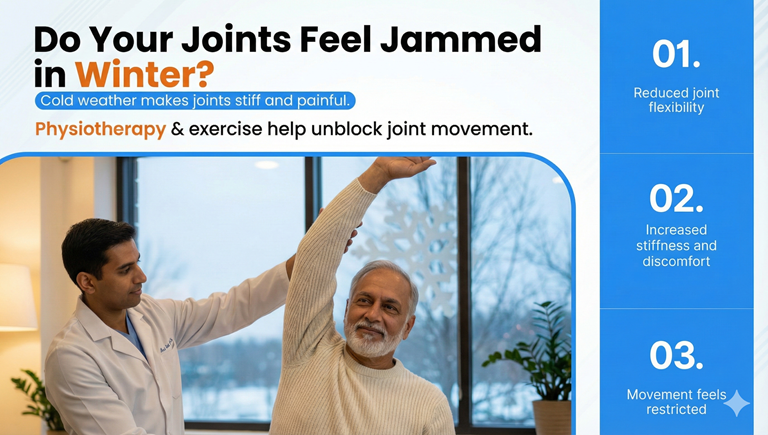
During winters, many people suffer from stiff joints, pain, and difficulty in movement. Today, we are speaking with a spine specialist from Capri Spine Clinic to understand why this happens and how physiotherapy helps such patients.
“That’s a very good question,” explains the specialist. “Cramps and stiffness occur in the body during the winter season because cold temperatures cause muscles to contract and reduce blood flow. As a result, muscles do not receive enough oxygen and nourishment, which makes the muscles and joints stiff and painful.
Physiotherapy plays a crucial role in relieving winter-related joint stiffness and pain in the following ways:
Heat Therapy : Heat therapy such as hot bandages, hot packs, and infrared radiation warms the muscles. This increases blood flow and helps loosen frozen and tight muscles.
Stretching and Mobilization Exercises : Stretching and mobilization exercises help restore muscle flexibility and gradually eliminate muscle spasms.
Manual Therapy : Manual therapy performed through hands allows the physiotherapist to improve mobility in stiff and restricted joints. Passive accessory movements increase the circulation of synovial fluid in and around the joints, helping provide proper nutrition to the affected joints.
Strengthening Exercises : Strengthening exercises improve weak muscles so they receive sufficient oxygen. This reduces the buildup of lactic acid and helps decrease pain. With regular physiotherapy, the body begins to move comfortably again during winters, and pain is significantly reduced.
If you experience frequent cramps or joint stiffness, consulting a physiotherapist early can prevent long-term damage, improve joint mobility, and effectively reduce pain.
Dr. Deepak Kumar, a renowned physiotherapist, explains that in many cases of joint stiffness and pain, doctors advise patients to take vitamin D3 and vitamin B12 supplements. However, many patients still complain of persistent joint pain and stiffness during winters.
According to Dr. Deepak Kumar, “Vitamin D3 and B12 help correct deficiencies in the body, but they do not cure frozen joints, weak muscles, or poor blood circulation. The real treatment for winter joint stiffness is physiotherapy, which restores movement and strength through heat therapy, stretching, mobility exercises, therapist-guided strengthening exercises, soft tissue release, and advanced manual therapy techniques.”
“We use advanced physiotherapy techniques such as heat therapy, ultrasonic therapy, Class 4 LASER, shockwave therapy, longwave diathermy, TECAR therapy, manual therapy, and guided physiotherapy exercises,” says Dr. Deepak Kumar. “These treatments relax tight muscles, improve blood flow, and restore joint mobility. Our goal is not just to relieve pain but to treat the root cause for long-term improvement.”
With regular physiotherapy, patients regain flexibility, strength, and confidence in their movement. If you are struggling with stiff joints and pain this winter, do not depend only on medicines.
Visit Capri Spine Clinic and get relief from joint stiffness, pain, and restricted movement with expert-guided physiotherapy. Start moving freely again and enjoy a healthy, active winter.