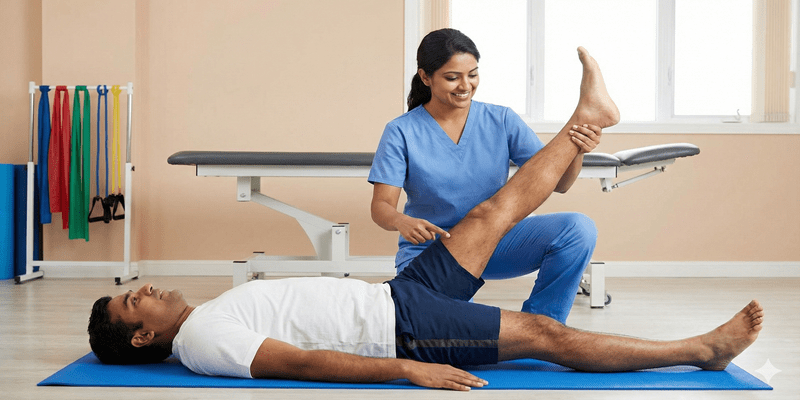
physiotherapy for disc bulge

Physiotherapy for Disc Bulge in Delhi NCR: Complete Treatment, Exercises & Safe Recovery Guide

A disc bulge occurs when an intervertebral disc protrudes beyond its normal boundary, placing pressure on surrounding nerves and tissues. This condition commonly leads to back pain, stiffness, tingling, numbness, or radiating pain in the arms or legs.

In Delhi NCR, disc bulge cases are increasingly seen among office professionals, drivers, IT workers, homemakers, and individuals with sedentary or physically demanding lifestyles. Fortunately, physiotherapy for disc bulge is one of the most effective non-surgical treatments, offering pain relief, spinal stability, and long-term recovery.

What Is a Disc Bulge?

The spine consists of vertebrae cushioned by discs that act as shock absorbers. When a disc weakens due to poor posture, repetitive strain, aging, or injury, it may bulge outward without rupturing.

Common Causes of Disc Bulge

  1. Prolonged sitting and poor ergonomics
  2. Sudden lifting or twisting movements
  3. Weak core muscles
  4. Obesity or lack of physical activity
  5. Age-related disc degeneration

Early management through physical therapy for disc bulge helps prevent worsening into disc herniation or nerve damage.

Why Physiotherapy Is Recommended for Disc Bulge

Painkillers and rest may provide temporary relief but do not correct the underlying spinal imbalance. Physiotherapy focuses on treating the root cause, not just the symptoms.

How Physiotherapy Helps in Disc Bulge

  1. Reduces inflammation and nerve irritation
  2. Improves spinal alignment and mobility
  3. Strengthens core and back muscles
  4. Relieves radiating pain, numbness, and tingling
  5. Prevents progression to disc herniation
  6. Reduces dependency on medication or surgery

Most patients experience noticeable improvement within a few weeks of consistent disc bulge physiotherapy treatment.

Disc Bulge Physiotherapy Treatment: Step-by-Step Approach

At a specialized spine center like Capri Spine, physiotherapy follows a structured and individualized rehabilitation plan.

1. Comprehensive Physiotherapy Assessment

The physiotherapist evaluates:

  1. Posture and spinal alignment
  2. Range of motion
  3. Muscle strength and flexibility
  4. Neurological signs (numbness, weakness, reflex changes)
  5. Pain triggers during sitting, bending, or walking

This helps identify the exact location and severity of the disc bulge.

2. Pain-Relief Modalities (Acute Phase Care)

During the painful phase, treatment may include:

  1. Heat or cold therapy
  2. IFT (Interferential Therapy) or TENS
  3. Ultrasound or laser therapy

These techniques reduce pain, muscle spasms, and inflammation, allowing safe progression to exercises.

3. Manual Therapy (When Indicated)

Gentle spinal mobilization and soft-tissue techniques help:

  1. Improve joint mobility
  2. Reduce stiffness
  3. Relax tight muscles

All techniques are performed without stressing the affected disc.

4. Core Stabilization & Strengthening

Weak core muscles increase pressure on spinal discs. Physiotherapy emphasizes:

  1. Deep abdominal muscle activation
  2. Pelvic and spinal stabilizer strengthening
  3. Controlled movement retraining

This step is essential for long-term disc bulge recovery.

5. Posture & Ergonomic Training

Poor posture is a major contributor to disc bulge, especially among desk workers in Delhi NCR. Patients are trained in:

  1. Correct sitting and standing posture
  2. Safe bending and lifting techniques
  3. Workstation ergonomics

This prevents recurrence and chronic pain.

Disc Bulge Physiotherapy Exercises (Safe & Supervised)

Exercise selection is crucial. Incorrect movements can worsen symptoms. Below are commonly prescribed disc bulge physiotherapy exercises, performed only under professional guidance.
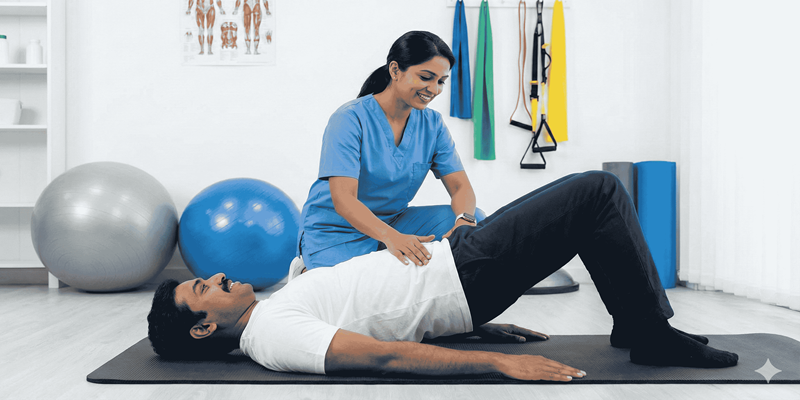
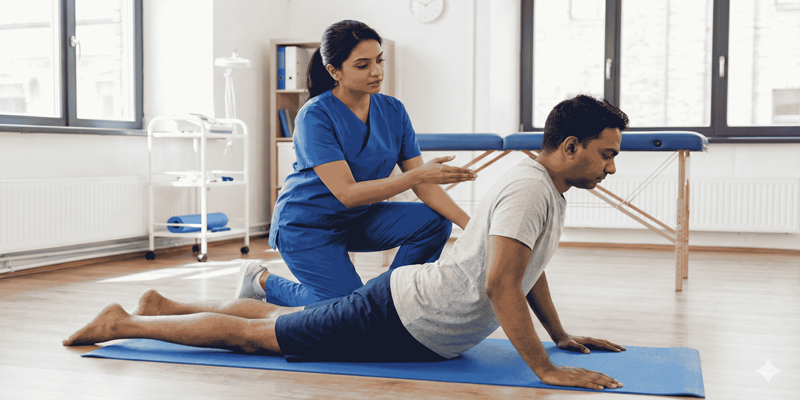
1. Pelvic Tilt Exercise

  1. Activates deep core muscles
  2. Reduces lumbar disc pressure


pelvic tilt exercise

2. McKenzie Extension Exercise

  1. Helps centralize disc-related pain
  2. Reduces nerve irritation


mckenzie extension exercise

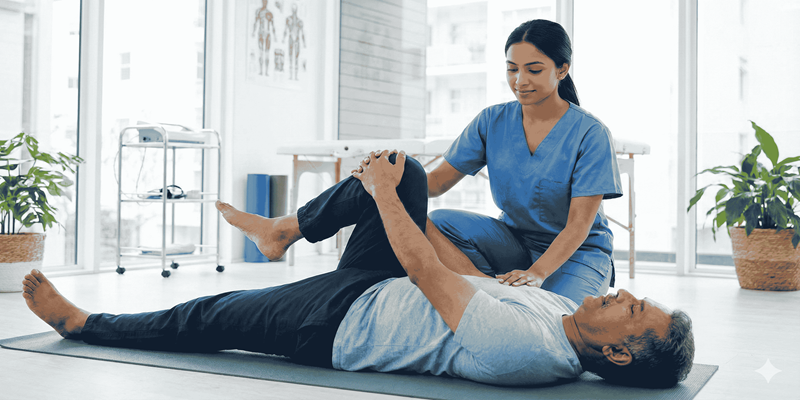
3. Knee-to-Chest Stretch

  1. Relieves spinal tension
  2. Improves flexibility


knee to chest stretch

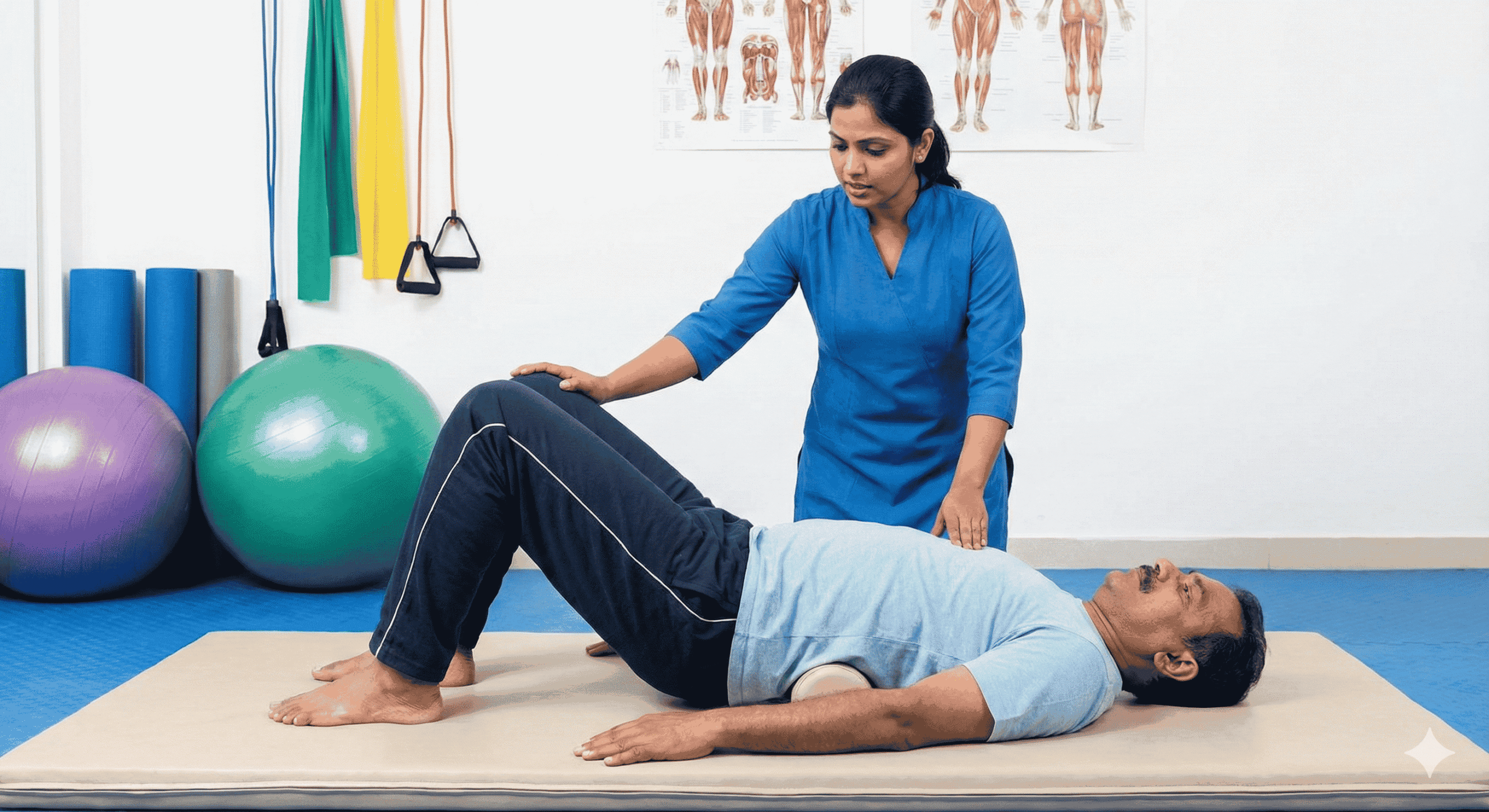
4. Bridging Exercise

  1. Strengthens gluteal and lower back muscles
  2. Supports spinal alignment


bridging exercise

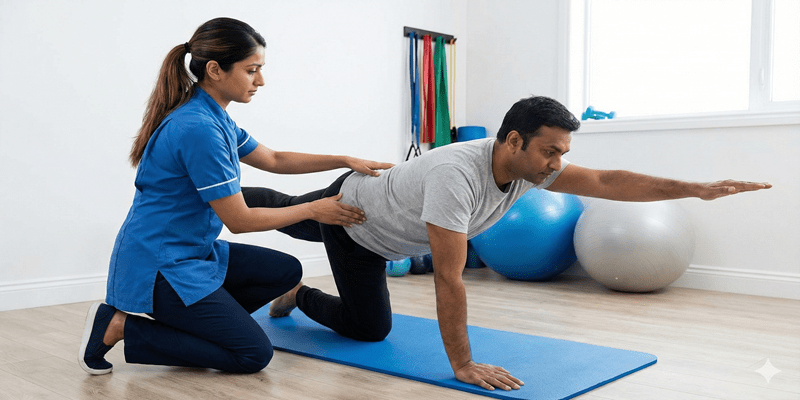
5. Bird Dog Exercise

  1. Enhances spinal stability and coordination


bird dog exercise

6. Hamstring Stretch

  1. Reduces strain on the lower back
  2. Improves movement efficiency


hamstring stretch

Important: Disc bulge exercises should never be done without physiotherapist supervision.

When Should You Consult a Physiotherapist for Disc Bulge?

You should seek professional physiotherapy if:

  1. Pain lasts more than a few days
  2. Pain radiates to arms or legs
  3. You experience numbness or tingling
  4. Sitting, bending, or lifting increases pain
  5. Sleep or daily activities are affected

Early physiotherapy leads to faster recovery and better outcomes.

Benefits of Physiotherapy for Disc Bulge

Physiotherapy offers both short-term relief and long-term protection:

  1. Drug-free pain management
  2. Reduced nerve compression symptoms
  3. Improved posture and spinal mechanics
  4. Stronger core and back muscles
  5. Lower risk of surgery or recurrence

This makes physical therapy for disc bulge the preferred first-line treatment.

Choosing the Right Physiotherapy Clinic for Disc Bulge in Delhi NCR

When selecting a clinic, look for:

  1. Experienced spine physiotherapists
  2. Personalized treatment protocols
  3. Advanced rehabilitation equipment
  4. Strong focus on exercise-based recovery
  5. Multidisciplinary spine care

Capri Spine Clinics, located across Delhi, Gurgaon, and Noida, provide evidence-based disc bulge physiotherapy treatment with a patient-centric approach.

Lifestyle Tips to Prevent Disc Bulge Worsening

Small daily changes can protect spinal health:

  1. Maintain neutral sitting posture
  2. Avoid prolonged sitting without breaks
  3. Lift objects using proper technique
  4. Strengthen core muscles regularly
  5. Follow physiotherapist-recommended exercises

Conclusion

A disc bulge does not always require surgery. With structured physiotherapy for disc bulge, guided exercises, posture correction, and lifestyle modification, most patients recover safely and return to normal activity.

If you are looking for expert disc bulge physiotherapy treatment in Delhi NCR, Capri Spine offers specialized, evidence-based care across multiple locations—helping patients recover confidently and pain-free.