
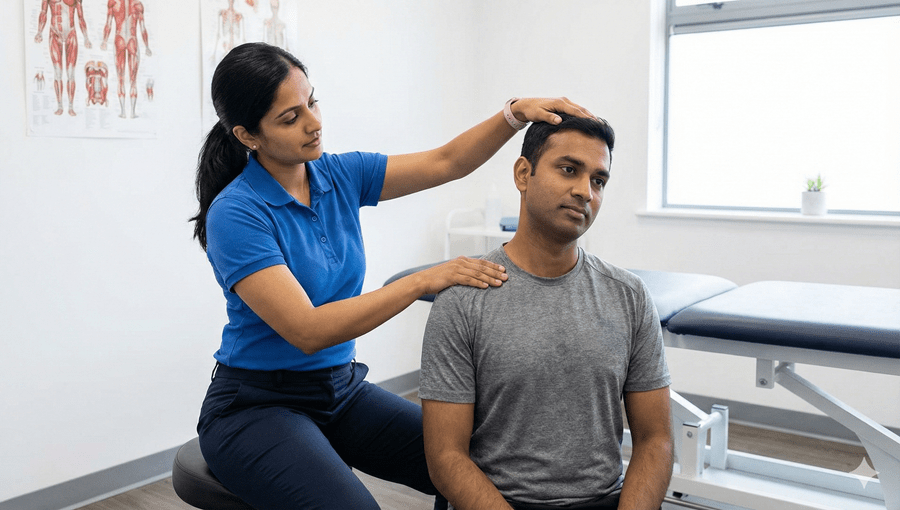
Cervical pain, commonly referred to as neck pain, is a widespread condition affecting people of all age groups. It is especially common among office workers, mobile users, drivers, and individuals with poor posture or sedentary lifestyles. If left untreated, physiotherapy for cervical pain can progress into chronic stiffness, headaches, shoulder pain, or nerve-related symptoms.
Cervical Pain is one of the safest and most effective non-surgical treatment options. It not only relieves pain but also addresses the root cause, improves posture, and prevents recurrence.
What Is Cervical Pain?
Cervical pain originates from the cervical spine (neck region), which consists of seven vertebrae, discs, muscles, ligaments, and nerves. Pain occurs when any of these structures are strained, compressed, or inflamed.
Common Causes of Cervical Pain
- Poor posture and prolonged screen use
- Long hours of desk work or mobile usage
- Cervical spondylosis (age-related degeneration)
- Muscle strain or ligament injury
- Stress and muscle tension
- Sudden jerky movements or accidents
Early physiotherapy intervention can prevent cervical pain from becoming chronic.
Why Physiotherapy Is Recommended for Cervical Pain
Painkillers may provide temporary relief but do not correct the underlying biomechanical issues. Physiotherapy treatment for cervical pain focuses on long-term recovery and prevention.
Benefits of Physiotherapy for Cervical Pain
- Reduces neck pain and stiffness
- Relieves muscle spasms
- Improves neck mobility and flexibility
- Corrects posture and ergonomics
- Reduces nerve compression symptoms
- Prevents recurrence and chronic pain
Most patients experience significant improvement within a few weeks of guided physiotherapy.
Physiotherapy Treatment for Cervical Pain: What to Expect
A structured and personalized approach ensures safe recovery.
- Detailed Physiotherapy Assessment
The physiotherapist evaluates:
- Posture and neck alignment
- Range of motion of the cervical spine
- Muscle strength and flexibility
- Presence of headaches, arm pain, or numbness
- Daily activity and workstation habits
This helps identify the exact cause of cervical pain.
- Pain-Relief Modalities (Acute Phase)
During the painful phase, treatment may include:
- Hot or cold therapy
- IFT or TENS
- Ultrasound or laser therapy
These modalities reduce inflammation, pain, and muscle tightness.
- Manual Therapy
Gentle manual techniques help:
- Release tight neck and shoulder muscles
- Improve joint mobility
- Reduce stiffness and pain
Manual therapy is always performed carefully to protect the cervical spine.
- Postural Correction & Ergonomic Training
Poor posture is a major contributor to cervical pain. Physiotherapy focuses on:
- Correct sitting and screen posture
- Proper pillow and sleeping positions
- Workplace ergonomics
This is essential for long-term relief.
- Strengthening & Stabilization
Weak neck and upper back muscles increase strain on the cervical spine. Strengthening exercises improve spinal support and reduce pain recurrence.
Physiotherapy Exercises for Cervical Pain (Safe & Supervised)
Exercise therapy is a key component of recovery. These physiotherapy exercises for cervical pain are prescribed based on individual assessment.
- Cervical Range of Motion Exercises
- Gentle neck flexion, extension, and rotation
- Improves mobility and reduces stiffness

- Chin Tuck Exercise
- Strengthens deep neck flexor muscles
- Corrects forward head posture

- Neck Isometric Exercises
- Builds neck muscle strength without movement
- Safe during early recovery

- Upper Trapezius Stretch
- Relieves shoulder and neck tightness

- Levator Scapula Stretch
- Reduces stiffness in the neck and upper back

- Scapular Strengthening Exercises
- Improves posture and neck support


Important: Exercises should always be performed under physiotherapist guidance. Incorrect technique may worsen symptoms.
When Should You See a Physiotherapist for Cervical Pain?
You should consult a physiotherapist if:
- Neck pain lasts more than a few days
- Pain radiates to the shoulders or arms
- You experience tingling, numbness, or headaches
- Pain worsens with sitting or screen use
- Sleep and daily activities are affected
Early physiotherapy leads to faster and safer recovery.
Benefits of Physiotherapist for Cervical Pain
Physiotherapy offers long-term advantages such as:
- Drug-free pain relief
- Improved posture and neck mobility
- Reduced muscle tension and nerve irritation
- Stronger neck and upper back muscles
- Lower risk of chronic cervical problems
This makes physiotherapy the preferred first-line treatment for cervical pain.
Choosing the Right Physiotherapy Clinic for Cervical Pain
When selecting a physiotherapy clinic, look for:
- Experienced spine physiotherapists
- Personalized cervical treatment programs
- Advanced pain management modalities
- Strong focus on posture correction and exercise therapy
Specialized spine clinics like Capri Spine provide evidence-based physiotherapy for cervical pain, ensuring safe and effective recovery.
Lifestyle Tips to Prevent Cervical Pain
Simple daily habits can protect your neck:
- Maintain correct sitting posture
- Avoid prolonged mobile or laptop use
- Take regular posture breaks
- Use a supportive pillow
- Perform prescribed neck exercises regularly
Conclusion
Cervical pain can significantly affect your comfort and productivity, but it is highly manageable with the right care. Physiotherapy for cervical pain, combined with targeted exercises and posture correction, helps relieve pain, restore movement, and prevent recurrence.
If you are experiencing persistent neck pain, early physiotherapy treatment for cervical pain can help you return to a pain-free and active life safely.