
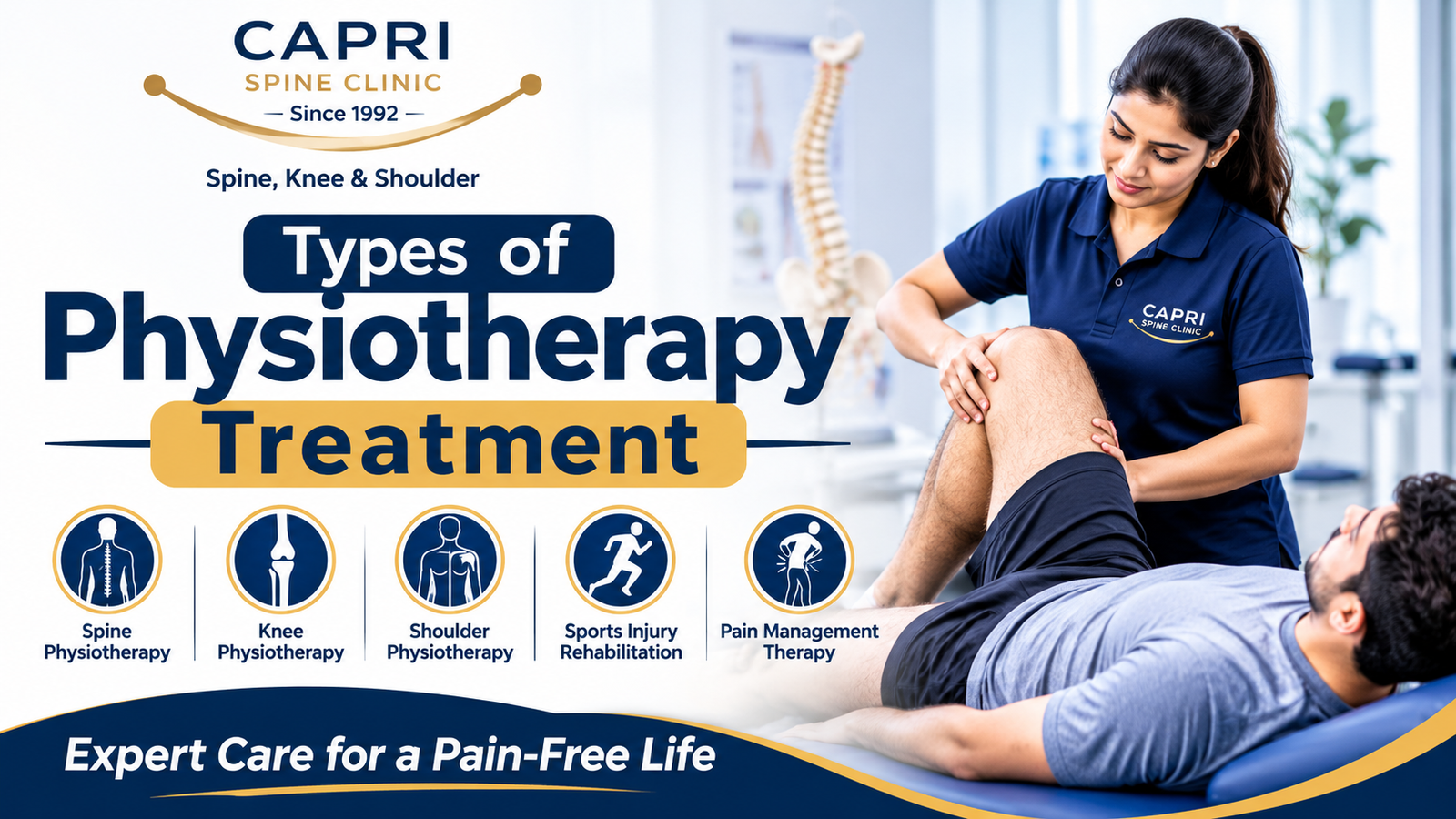
Physiotherapy plays an altogether very crucial role in managing pain, improving the level of mobility and restoring physical function to a great extent. No matter if you are experiencing back pain, knee problems, neck stiffness, a sports injury or difficulty moving after surgery, the right physiotherapy programme can help you work towards better movement and also improved quality of life.
However, physiotherapy is not a one-size-fits-all treatment. The various conditions require different kinds of techniques, exercises and also rehabilitation approaches. Understanding the types of physiotherapy treatment that is available can help you make the most informed decisions about your recovery.
At Capri Spine, physiotherapy focuses largely on identifying the underlying cause of discomfort and creating the most personalised plans of treatment. Its approach combines manual therapy, corrective exercises and other techniques of physiotherapy as per to individual needs.
What Is Physiotherapy Treatment?
If you are wondering what is physiotherapy treatment, it is a healthcare approach that uses several physical techniques, therapeutic exercises and also effective methods of rehabilitation that improve movement, manage the intensity of pain and restore physical function to a great extent.
Physiotherapy may help people in dealing with:
- Back pain, neck pain and cervical problems.
- Slip disc, disc bulge and sciatica.
- Shoulder, knee and joint pain.
- Sports injuries and muscle strains.
- Postural problems and various movement restrictions.
- Recovery after certain surgeries or injuries.
- Muscle weakness, stiffness and reduced level of flexibility.
A physiotherapist evaluates your symptoms, patterns of movement, strength, flexibility and medical history before finally recommending a suitable plan of treatment.
7 Common Types of Physiotherapy Treatment
The choice of treatment depends on your condition, level of pain, physical limitations and goals of recovery. Here are some commonly used approaches.
1. Manual Therapy
Manual therapy involves several hands-on techniques that are performed by a well-trained physiotherapist to improve various aspects like joint movement, reduce stiffness and manage the level of musculoskeletal discomfort.
It may include joint mobilisation, soft-tissue techniques and also therapeutic manipulation when clinically appropriate.
Manual therapy is commonly being used for the case of back pain, shoulder stiffness, neck pain and certain joint conditions. It may also be effectively combined with certain exercises to support longer-term improvements in mobility and function.
2. Exercise Therapy
Exercise therapy is a very important part of physiotherapy rehabilitation. It involves a range of specific exercises that are strategically designed to improve strength of muscle, balance, coordination, flexibility and joint movement.
Depending on your condition, your physiotherapist may recommend the following:
- Stretching exercises to improve your level of flexibility.
- Strengthening exercises that support muscles and joints adequately.
- Core exercises that improve the spinal stability.
- Balance exercises to improve your level of coordination.
- Mobility exercises to restore the level of movement.
Regular practice, with the most appropriate progression, can help in improving the physical function and reduce the risk of recurring problems.
3. Electrotherapy
Electrotherapy uses certain proven electrical or other physical energy-based modalities as part of the selected physiotherapy programmes. Certain techniques like as interferential therapy (IFT) and TENS may effectively be used to help managing certain types of pain.
Ultrasound therapy may also be considered to be implemented in some of the selected cases. These particular modalities are generally being used alongside active rehabilitation rather than as a replacement for the exercises or appropriate medical care.
The physiotherapist determines whether electrotherapy is considered to be suitable based on your symptoms, diagnosis and also medical history.
4. Dry Needling
Dry needling is a time-proven effective technique in which a well-trained practitioner inserts fine, sterile needles into certain selected areas of muscle in order to address the muscular pain and problem of sensitivity.
It may be considered for certain musculoskeletal conditions involving the problems of muscle tightness or trigger points. This particular procedure should only be performed by an appropriately well-trained professional after assessing the condition of the patient.
Dry needling is not at all suitable for everyone and is generally being used as one component of a broader rehabilitation plan.
5. Kinesio Taping
Kinesio taping involves applying a well-specialised elastic tape to selected areas of the body. It may be used to provide sensory feedback, support movement and also help manage certain musculoskeletal symptoms.
Physiotherapists may use taping for certain selected sports injuries, muscle discomfort, joint problems and also movement-related conditions.
Its effectiveness varies depending on the condition and also individual response. It is usually combined with a set of effective exercises and other techniques of rehabilitation.
6. Spinal Traction
Spinal traction involves applying of a controlled pulling force to the spine. It may be considered in certain selected cases that involves spinal or nerve-related symptoms.
A physiotherapist or treating specialist must thoroughly assess if the traction is appropriate. It is not suitable for every person with back pain, a disc bulge or sciatica.
The treatment plan should necessarily be based on a proper examination and the patient’s response to the given therapy.
7. Posture Correction and Ergonomic Training
Poor habits of movement, prolonged sitting and also unsuitable workstation arrangements can contribute to recurring discomfort.
Posture correction and also ergonomic training help more and more patients to understand how their daily activities may affect their muscles, spine and joints.
A physiotherapist may recommend the following:
- Correct sitting as well as standing positions.
- Suitable adjustments in the workstation
- Safe lifting and bending techniques.
- Movement breaks during a course of prolonged sitting.
- Exercises to improve the postural strength.
All of the above-mentioned changes can likely support recovery and help patients maintain much healthier movement habits.
Understanding the Procedure of Physiotherapy
A well-structured procedure of physiotherapy likely begins with a thorough understanding of the patient’s condition rather than immediately starting the treatment. The process generally involves the following stages:
1. Initial Consultation: The physiotherapist discusses all your symptoms, detailed medical history, lifestyle and also the goals of treatment.
2. Physical Assessment: Joint movement, posture, strength of muscle, flexibility and also the functional limitations are thoroughly evaluated.
3. Planning of Treatment: Based on the various findings, a personalised programme is developed using the most suitable techniques of physiotherapy.
4. Treatment Sessions: Therapy may include certain manual techniques, therapeutic exercises, modalities of pain management and movement training.
5. Progress Monitoring: Your response to treatment is very closely reviewed, and the programme is accordingly adjusted as needed.
6. Home Exercise Guidance: You may receive exercises and practical advice to continue the process of rehabilitation between clinic visits.
The duration and also the number of sessions depend on your pain’s severity, overall health condition and progress in recovery.
How to Choose the Right Physiotherapy Treatment
With numerous treatment options available in the present times, choosing the right approach can appear to be confusing. The most appropriate treatment likely depends on an accurate assessment and your individual requirements of recovery.
You may consider the following major factors:
- Correct diagnosis: You may understand the underlying cause of the pain or movement restriction that you are facing.
- Qualified professionals: You should make it a point to choose a clinic with a well-trained and adequately experienced physiotherapists.
- Personalised treatment: Your programme should necessarily address all your symptoms, the physical condition as well as goals.
- Active rehabilitation: Exercises and also patient participation should form a crucial part of recovery.
- Regular monitoring: Treatment should be reviewed as per your progress.
Thoroughly understanding the types of physiotherapy treatment available can help you to have a more informed discussion with your physiotherapist. However, the most advanced technique is not necessarily the best option for every patient. The right combination depends on your clinical assessment.
Why Should You Choose Capri Spine for Physiotherapy?
Capri Spine has been providing the most specialised knee, spine and shoulder physiotherapy services since 1992. Its approach of treatment combines a mix of manual therapy, corrective exercises and other rehabilitation techniques in order to address the individual movement as well as pain-related concerns.
The clinic’s approach likely includes the following:
- A detailed assessment to identify the various other contributing factors.
- Personalised physiotherapy as well as rehabilitation plans.
- Manual therapy and corrective movement techniques.
- Exercise-based recovery and also posture guidance.
- Progress monitoring and long-term movement support.
No matter if you are dealing with neck stiffness, back pain, a disc-related condition or joint discomfort, a thorough professional assessment can help you in determining the most appropriate care.
Take the Very First Step Towards Better Movement
Do not let the persistent pain or the problem of restricted mobility interfere with your everyday activities. You should consult the physiotherapy specialists at Capri Spine to thoroughly understand your condition and explore the most suitable options of treatment.
Book an Appointment with Capri Spine Today.
Frequently Asked Questions
1. What are the commonest types of physiotherapy treatment?
The commonest approaches include various treatment practices like manual therapy, electrotherapy, exercise therapy, dry needling, spinal traction, kinesio taping, and posture correction.
2. What is physiotherapy treatment used for?
Physiotherapy helps to manage pain, improve the level of mobility, restore strength and support the process of rehabilitation for different musculoskeletal and movement-related conditions.
3. Is physiotherapy painful?
Some techniques or exercises may likely cause temporary discomfort, depending on your condition. Your physiotherapist should necessarily adjust to the treatment according to your comfort and clinical needs.
4. How many physiotherapy sessions are required?
The number of physiotherapy sessions that one needs depend on your diagnosis, the severity of the disease, the goals of treatment and progress. Your physiotherapist can suggest a highly suitable schedule after the assessment.
5. Can physiotherapy help with back pain and slip disc?
Yes. Physiotherapy may help in managing back pain and certain other disc-related conditions through the most appropriate exercises, movement training and selected manual techniques. Treatment should be based on an individual assessment.