Delhi, Noida, Gr Noida, Gurugram
Call Us:- +91 906 312 1212

About Sciatica Pain
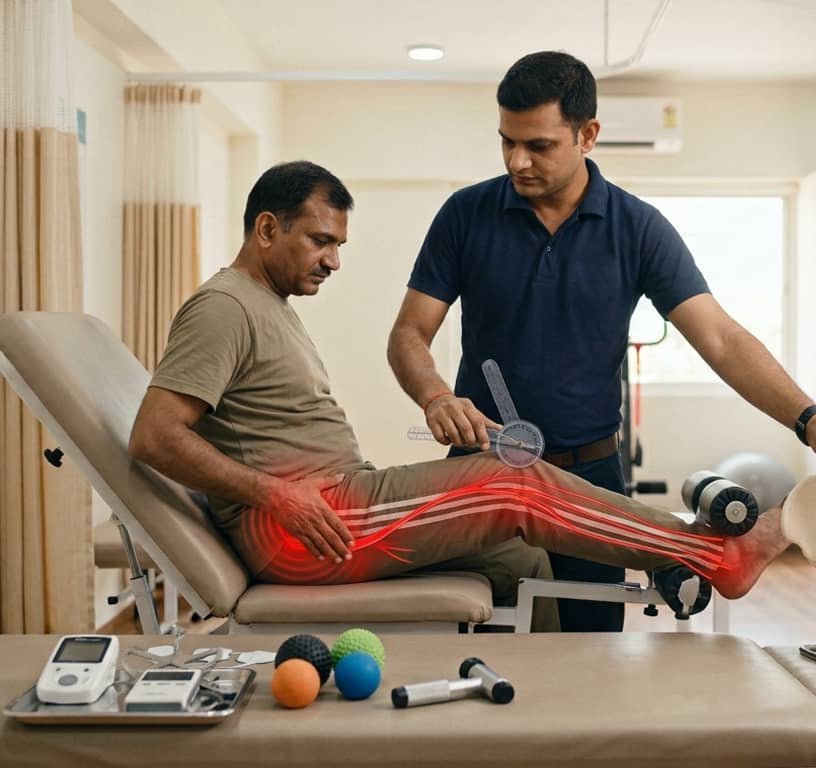
Sciatica pain is a condition that occurs when the sciatic nerve — the longest nerve in the body — becomes irritated, inflamed, or compressed. This nerve runs from the lower back through the hips and buttocks and down each leg. When affected, it can cause pain that radiates along this entire pathway, making everyday activities like sitting, walking, or standing uncomfortable.
Sciatica is commonly caused by conditions such as a slipped disc, spinal degeneration, or nerve compression in the lower back. It may begin as mild lower back discomfort but can gradually progress into sharp, shooting pain that travels down one leg. If left untreated, sciatica can lead to chronic pain, reduced mobility, and nerve-related complications.
Unlike general back pain, sciatica is nerve-related and often affects only one side of the body. The intensity of pain can vary from a mild ache to severe, burning, or electric shock-like sensations that worsen with movement, prolonged sitting, or sudden posture changes.
At Capri Spine Clinic, we follow a scientific, evidence-based, and non-surgical approach to identify the root cause of sciatica and provide personalized treatment plans that relieve nerve pressure, reduce pain, and restore mobility.
Common Symptoms Of Sciatica Pain
Sciatica symptoms can vary depending on the severity of nerve compression and the underlying condition. In many cases, symptoms start gradually and worsen over time if not treated properly.
Common Symptoms Include:
Pain radiating from the lower back to the buttock and down one leg
Sharp, shooting, or burning pain in the leg
Numbness or tingling sensation in the leg or foot
Muscle weakness in the affected leg
Pain that worsens while sitting or standing for long periods
Difficulty in walking or maintaining balance
Electric shock-like sensation during movement
Pain that increases while coughing, sneezing, or bending
Reduced mobility in the lower back and leg
If you are experiencing these symptoms frequently — especially if the pain travels down the leg or is associated with numbness or weakness — it is important to seek professional evaluation and early treatment.
How Physiotherapy Helps In Sciatica Pain Management
Physiotherapy is one of the most effective, safe, and non-surgical methods for treating sciatica pain by relieving nerve compression and improving spinal function. At Capri Spine Clinic, our experts design customized rehabilitation programs based on the patient’s condition, lifestyle, and severity of pain.
Our Physiotherapy Approach Includes:
Targeted exercises to relieve nerve pressure
Stretching techniques to reduce muscle tightness
Manual therapy to improve spinal alignment
Electrotherapy for pain relief and inflammation reduction
Posture correction to prevent recurrence
Lifestyle guidance for long-term relief
These treatments not only relieve pain but also address the root cause, improve mobility, and prevent future episodes of sciatica.
Causes Of Sciatica Pain
Sciatica pain usually occurs when the sciatic nerve is compressed, irritated, or inflamed due to underlying spinal conditions or lifestyle factors. Since this nerve originates in the lower back and travels down the leg, any pressure along its pathway can lead to radiating pain, numbness, or weakness.
Below are the major causes and risk factors of sciatica pain:
1. Slip Disc (Herniated Disc)
A slipped or herniated disc is one of the most common causes of sciatica.
Disc bulges or ruptures and presses on the sciatic nerve
Causes radiating pain from lower back to leg
May lead to numbness, tingling, or weakness
2. Spinal Stenosis
Spinal stenosis refers to the narrowing of the spinal canal.
Reduces space for nerves in the lower back
Compresses the sciatic nerve
Common in older adults
3. Piriformis Syndrome
The piriformis muscle, located in the buttock, can irritate the sciatic nerve.
Muscle tightness or spasm presses the nerve
Causes pain in the buttock and down the leg
Often linked to prolonged sitting
4. Degenerative Disc Disease
Age-related wear and tear in spinal discs can contribute to sciatica.
Loss of disc height and flexibility
Increased pressure on spinal nerves
Chronic lower back and leg pain
5. Injury Or Trauma
Sudden injuries can affect the lower spine and surrounding tissues.
Falls, accidents, or sports injuries
Damage to discs, muscles, or nerves
Can trigger acute sciatica pain
6. Poor Posture & Prolonged Sitting
Modern lifestyle habits significantly contribute to sciatica.
Long hours of sitting increase pressure on lower back
Slouched posture strains spinal discs
Reduced movement leads to muscle stiffness
7. Obesity & Excess Weight
Extra body weight increases pressure on the spine.
Adds stress to lower back discs
Increases risk of nerve compression
Contributes to chronic sciatica pain
8. Pregnancy
Pregnancy can sometimes lead to sciatica due to physical changes.
Increased pressure on the sciatic nerve
Hormonal changes affecting ligaments
Altered posture and weight distribution
Additional Contributing Factors
Lack of regular exercise and physical activity
Weak core and lower back muscles
Improper lifting techniques
Long driving hours without support
Previous history of lower back problems
Sciatica Pain Diagnosis
Early and accurate diagnosis of sciatica pain is essential to identify the exact cause of nerve compression and prevent it from progressing into chronic pain, severe nerve damage, or mobility issues. Since sciatica originates from the lower spine and affects the sciatic nerve, a detailed evaluation is required for effective treatment.
At Capri Spine Clinic, we follow a scientific and evidence-based approach to assess spinal health, nerve function, and movement patterns using advanced diagnostic techniques and clinical assessments.
1. Physical Examination & Movement Assessment
The first step in diagnosing sciatica involves a thorough physical examination.
Assessment of lower back and leg pain
Evaluation of movement, flexibility, and posture
Identification of pain triggers during activities
Straight leg raise test to detect nerve irritation
This helps determine the severity and source of the problem.
2. Neurological Examination
A detailed neurological assessment is done to evaluate nerve involvement.
Testing reflexes, muscle strength, and coordination
Checking for numbness or tingling in the leg or foot
Identifying signs of sciatic nerve compression
This step is crucial to understand the extent of nerve impact.
3. Postural & Spinal Assessment
Posture plays a key role in sciatica pain.
Analysis of spinal alignment and posture
Detection of lower back imbalances
Evaluation of sitting and standing habits
Identification of pressure points on the spine
This helps identify lifestyle-related causes.
4. Medical & Lifestyle History
Understanding the patient’s background helps in identifying contributing factors.
History of lower back pain or injuries
Duration and pattern of sciatica pain
Work habits, sitting duration, and activity level
Lifestyle factors like obesity or inactivity
This allows for a personalized and targeted treatment plan.
5. Imaging & Diagnostic Tests
In some cases, advanced imaging may be recommended.
X-rays to check spinal alignment
MRI scans to evaluate discs and nerve compression
CT scans for detailed structural analysis
These tests help confirm conditions like herniated disc or spinal stenosis.
Why Early Diagnosis Matters
Early diagnosis helps prevent worsening of nerve compression, chronic pain, and reduced mobility. Timely physiotherapy and lifestyle correction can significantly improve recovery and prevent recurrence.
At Capri Spine Clinic
Our comprehensive sciatica diagnosis process ensures a 360° evaluation of your spine and nerve health.
By combining clinical expertise with advanced assessment techniques, we create personalized treatment plans that relieve nerve pressure, restore mobility, and help you return to a pain-free life — naturally, without surgery.
Treatment For Sciatica Pain
Physiotherapy plays a vital role in the non-surgical management of sciatica pain, helping relieve nerve compression, reduce inflammation, and restore normal movement. Unlike medications that provide temporary relief, physiotherapy focuses on treating the root cause by improving spinal alignment, muscle strength, and flexibility.
At Capri Spine Clinic, our expert physiotherapists design personalized, evidence-based treatment programs that are safe, effective, and tailored to each individual’s condition, severity of pain, and lifestyle.
1. Nerve Mobilization & Stretching Exercises
Targeted exercises help relieve pressure on the sciatic nerve and improve flexibility.
Sciatic nerve gliding exercises
Hamstring and lower back stretching
Piriformis muscle stretching
Gentle mobility exercises
These exercises reduce nerve irritation and improve movement.
2. Strengthening Exercises
Strengthening the core and lower back muscles is essential for spinal support.
Core strengthening exercises
Lower back and pelvic stability training
Hip and glute muscle strengthening
Functional movement exercises
Strong muscles reduce stress on the spine and prevent recurrence.
3. Pain Relief Therapies (Electrotherapy & Modalities)
Advanced physiotherapy techniques are used to reduce pain and inflammation.
Ultrasound therapy for deep tissue healing
TENS for nerve pain relief
IFT to improve blood circulation
Heat and cold therapy to relax muscles
These therapies provide quick and effective relief from sciatica pain.
4. Manual Therapy & Spinal Mobilization
Hands-on techniques help improve spinal movement and reduce nerve pressure.
Spinal mobilization techniques
Soft tissue release
Myofascial release
Trigger point therapy
This approach enhances flexibility and reduces stiffness.
5. Postural Correction & Ergonomic Training
Correct posture is essential to prevent sciatic nerve compression.
Sitting and standing posture correction
Workstation ergonomics guidance
Proper lifting techniques
Daily movement habit correction
This helps reduce strain on the lower back.
6. Traction Therapy
Spinal traction is used in specific cases to relieve pressure on nerves.
Reduces disc pressure
Helps in herniated disc conditions
Improves spinal alignment
Relieves radiating leg pain
This therapy is performed under expert supervision.
7. Lifestyle & Activity Modification
Long-term relief requires lifestyle changes and habit correction.
Avoiding prolonged sitting
Maintaining healthy body weight
Regular stretching and exercise
Proper sleeping posture
A holistic approach ensures long-term recovery and prevention.
Benefits Of Physiotherapy For Sciatica Pain
Pain relief without medicine or surgery
Reduced nerve compression and inflammation
Improved mobility and flexibility
Strengthened core and spinal support
Relief from radiating leg pain and numbness
Long-term prevention of recurrence
Sciatica Care At Capri Spine Clinic
At Capri Spine Clinic, we combine advanced physiotherapy techniques with expert clinical care to treat sciatica pain effectively and safely.
Our goal is not just to manage symptoms but to relieve nerve pressure, restore mobility, and help patients return to a pain-free, active lifestyle — naturally, without surgery.
Sciatica Pain Physiotherapy Treatment in Delhi-NCR
Sciatica is a medical condition that can cause pain, tingling or discomfort that travels from the lower back towards the leg, making your everyday movement difficult. Timely physiotherapy can help you in improving your mobility and manage all the visible symptoms.
At Capri Spine, Sciatica Pain Physiotherapy Treatment in Delhi-NCR is personalised as per your symptoms, limitations of movement and also the set recovery goals. Your physiotherapist continually assesses your condition and accordingly develops a targeted plan of rehabilitation.
Treatment may largely focus on improving your overall flexibility, the level of strength, posture and also movement patterns in order to support better function.
Are you looking for professional sciatica care?
Then you should book a consultation with Capri Spine today and take the very first step towards regaining more comfortable movement.

1L+ Patients Treated Successfully
Trusted By Patients Across India
The Capri Method has helped thousands of patients overcome chronic back, neck, joint, and spine-related pain without surgery.
FAQ's
1. What is sciatica pain and what causes it?
Sciatica is a type of nerve pain that occurs when the sciatic nerve is compressed, irritated, or inflamed. This nerve runs from the lower back through the hips and down each leg. Common causes include slipped disc, spinal stenosis, piriformis syndrome, or degeneration of the spine. The condition usually affects one side of the body and can cause radiating pain along the nerve pathway.
2. What are the early symptoms of sciatica?
Early symptoms of sciatica often begin with mild lower back discomfort that gradually spreads to the buttock and leg. You may feel tingling, numbness, or a burning sensation along the leg. The pain may increase while sitting, bending, or standing for long periods. Early identification is important to prevent worsening of nerve compression.
3. When should I see a doctor for sciatica pain?
You should consult a specialist if your pain lasts more than a few days, becomes severe, or interferes with daily activities. Immediate attention is needed if you experience numbness, weakness, or difficulty walking. Pain that radiates down the leg or worsens over time may indicate nerve involvement. Early diagnosis helps in faster and more effective recovery.
4. Can sciatica go away on its own?
Mild cases of sciatica may improve with rest, proper posture, and basic care. However, if the underlying cause like a slipped disc or nerve compression is not addressed, the pain may return or worsen. Persistent sciatica usually requires physiotherapy and targeted treatment. Early intervention helps prevent chronic pain and complications.
5. What is the best treatment for sciatica pain?
Physiotherapy is one of the most effective treatments for sciatica pain. It includes exercises, manual therapy, and posture correction to relieve pressure on the sciatic nerve. Advanced therapies like traction and electrotherapy may also be used. The goal is to treat the root cause and restore normal movement without surgery.
6. Is sciatica related to a slipped disc?
Yes, a slipped or herniated disc is one of the most common causes of sciatica. When the disc bulges out, it can press on the sciatic nerve, causing pain that radiates down the leg. This may also lead to numbness, tingling, or weakness. Proper diagnosis is important to determine the severity and plan treatment accordingly.
7. Can sciatica cause leg pain and numbness?
Yes, sciatica typically causes pain that travels from the lower back to the buttock and down the leg. It may also lead to numbness, tingling, or a “pins and needles” sensation. In some cases, muscle weakness can occur in the affected leg. These symptoms indicate nerve involvement and should not be ignored.
8. How long does sciatica take to heal?
Recovery time depends on the cause and severity of the condition. Mild cases may improve within a few weeks with rest and physiotherapy. However, chronic or severe cases may take longer and require consistent treatment. Following a proper rehabilitation plan helps speed up recovery and prevent recurrence.